
You cannot recruit your way out of the care gap.

BDO's new Benchmark Langdurige Zorg 2026,, its yearly study of long-term care, reads as a warning. The staffing crisis in elderly care is deepening. Thousands of hired workers have left the sector after a change in the rules on self-employment, sick leave keeps rising, and stands at 9.2 per cent. Strip the property out of the books, BDO points out, and the care itself runs at a loss.
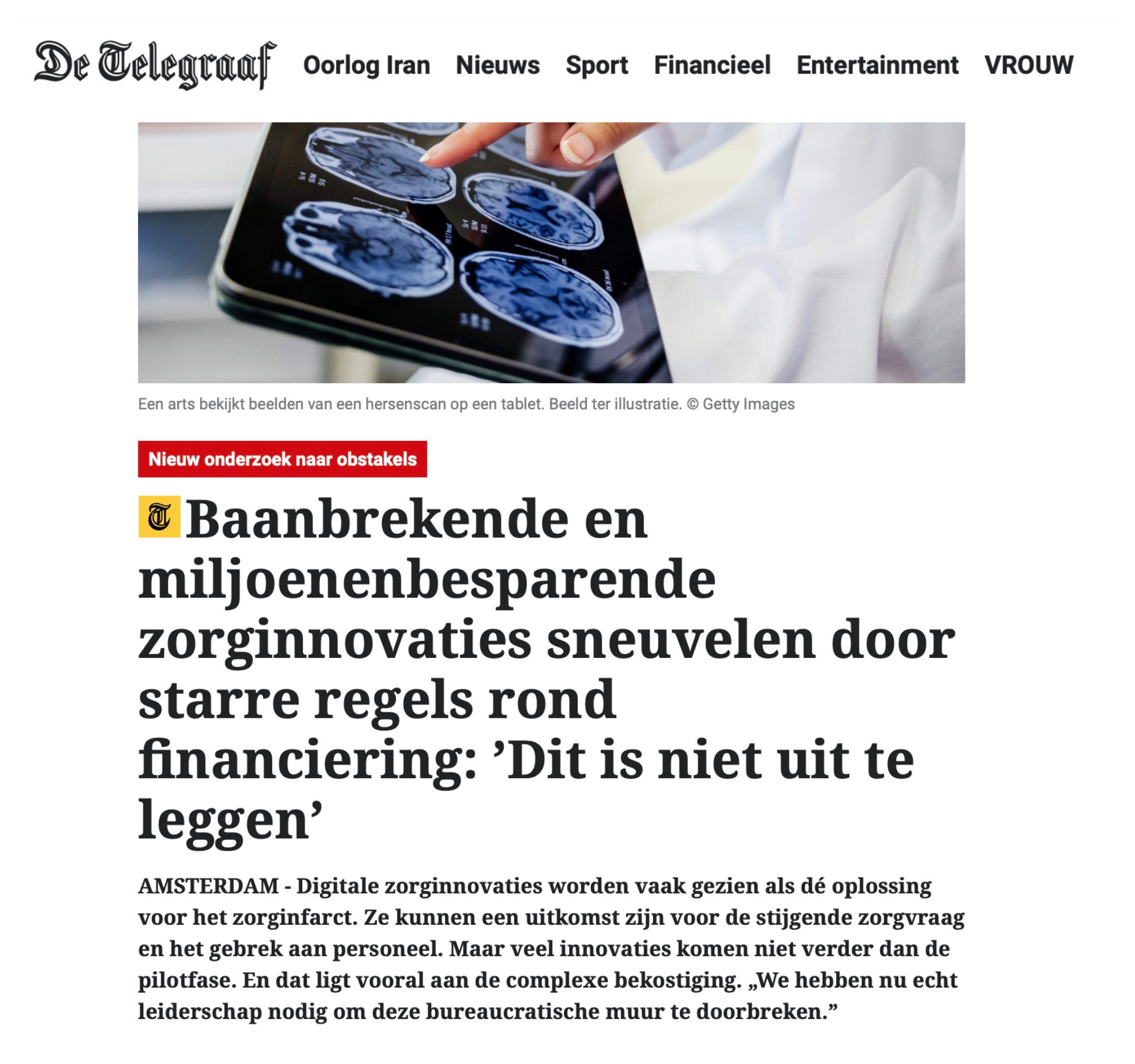
There is one line in the report I keep coming back to, because it points the way out. BDO tells boards to adopt labour-saving technology faster. That is the right call, and the encouraging part is that this is not a distant idea waiting for its moment. It already works in the market, and the results are on the table.
You cannot recruit your way past a gap this size
By 2030 the Netherlands will be short around 150,000 care workers. No hiring drive closes a gap that size. The only answer that scales is to give the people already doing the work more time and better tools, so the hours we have go further. That is exactly where the best digital health companies now deliver, and two of the companies we back show what it looks like in practice.
Keeping staff well, and getting them up to speed faster
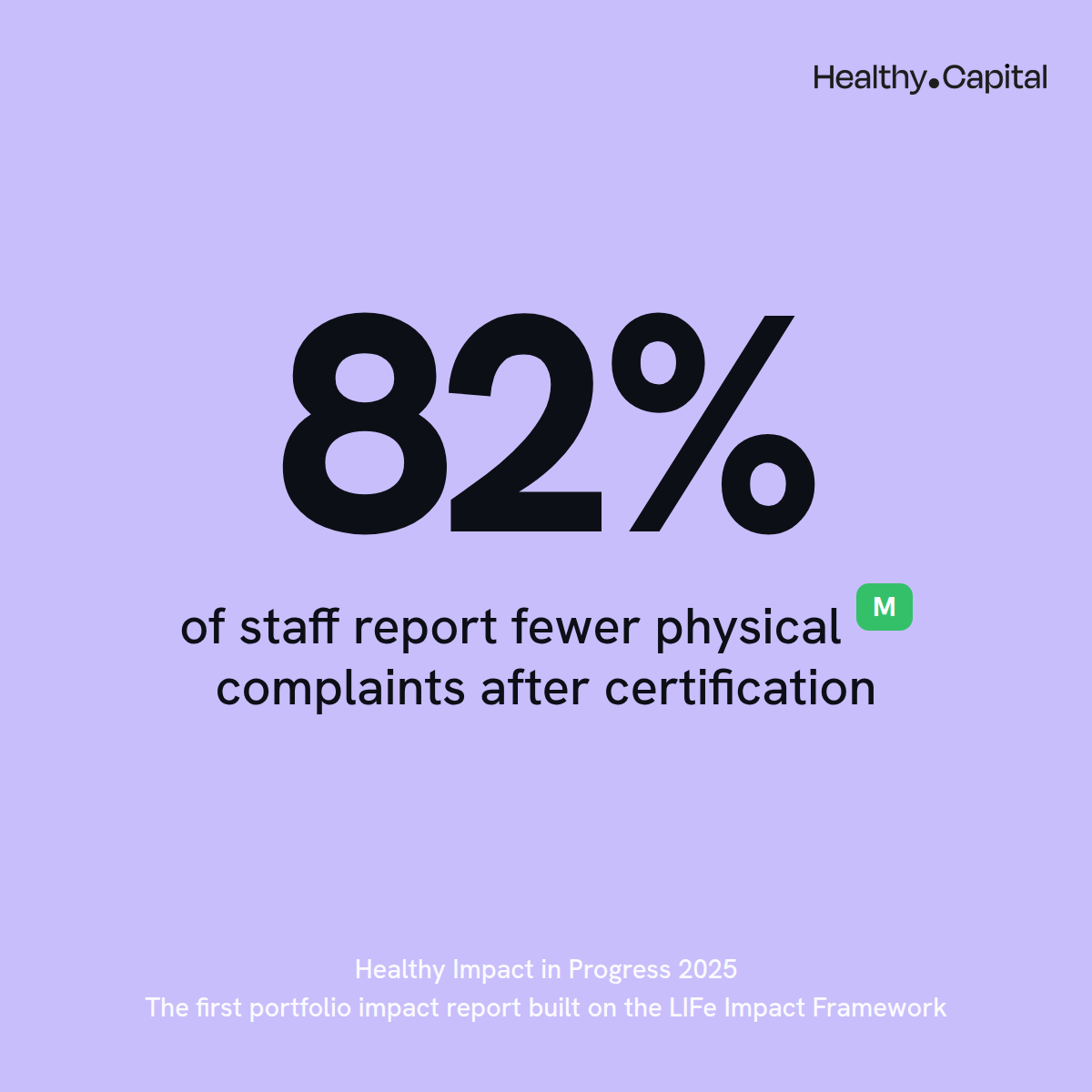
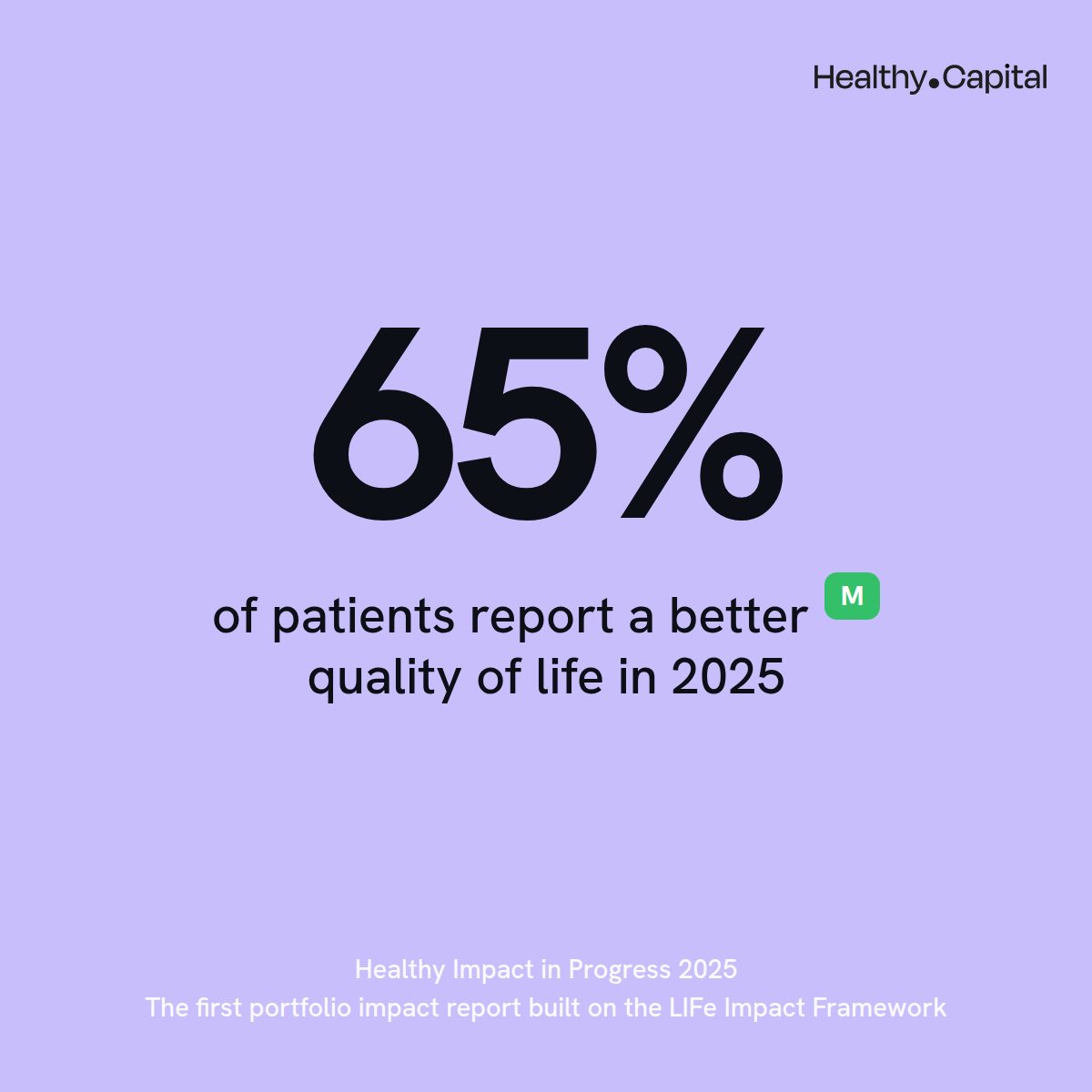
Take Primio. It puts training and protocols on a care worker's phone, in short practical lessons they take during a shift rather than in a classroom off site. The effect on a stretched team is direct. In 2025, 82 per cent of the staff who use it report fewer physical complaints after certification, training time drops by around three quarters, and the platform frees the equivalent of 13 full-time care workers, while helping employers keep the people they already have. In a sector that loses staff to illness and to the exit door, a tool that keeps people healthy on the job and gets new staff up to speed faster is not a luxury. It is oxygen.
People leaving care, and people arriving in it
Or take Saar aan Huis, which places trusted, familiar help in the home. That lets older people stay independent for longer and takes routine pressure off the formal system. Two numbers stand out. In 2025 it frees the equivalent of 250 full-time care workers in formal capacity, and it brings 280 full-time equivalents of people of pensionable age back into work as Saars. The benchmark describes people leaving care. Here are people arriving in it. That is the shape of the answer: not only doing more with the staff we have, but widening who can help in the first place. BDO also notes that fewer people now move into nursing homes, because they would rather stay at home, and home support of this kind is what makes that choice a safe one.
Fixing this is not a matter of hope. It is measurable
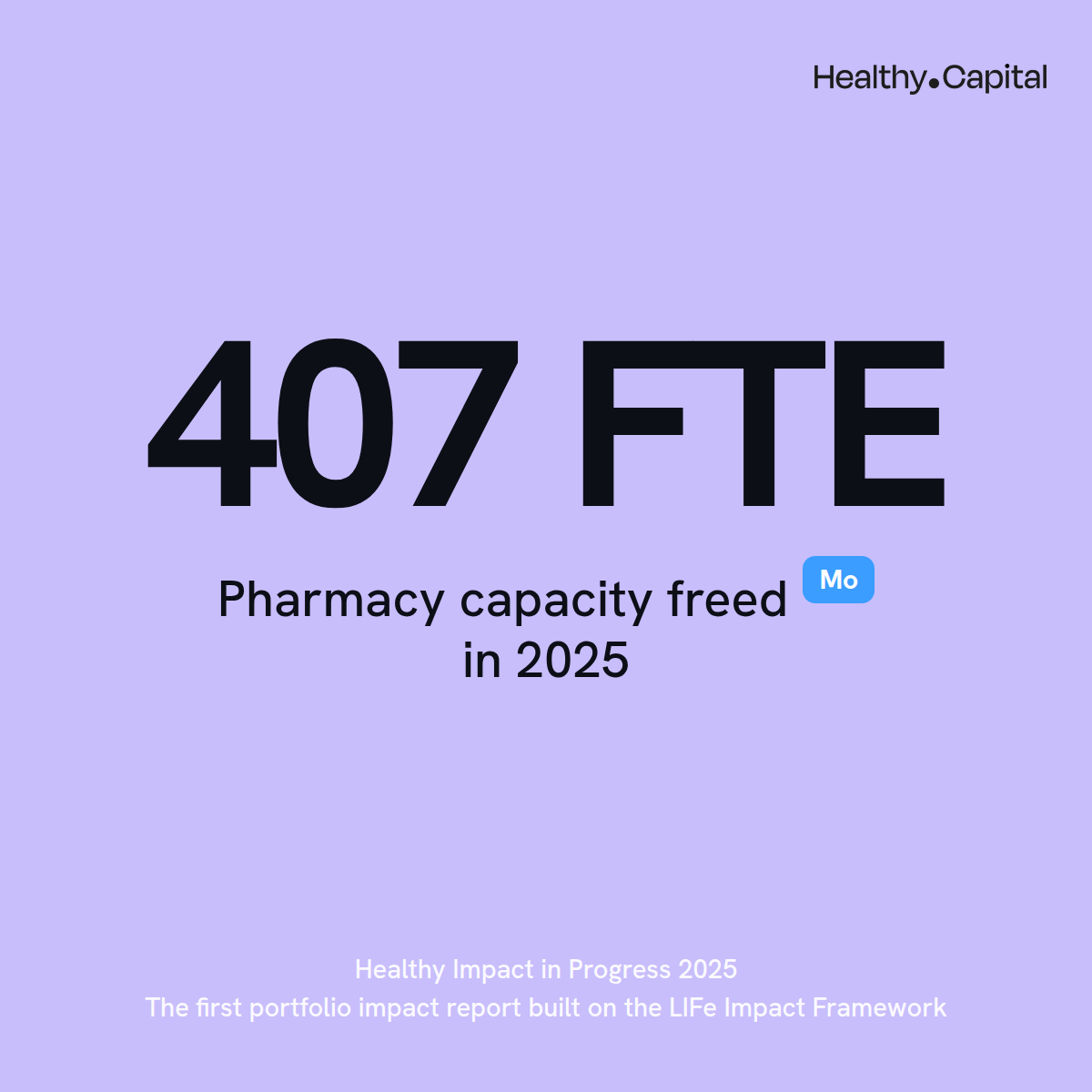
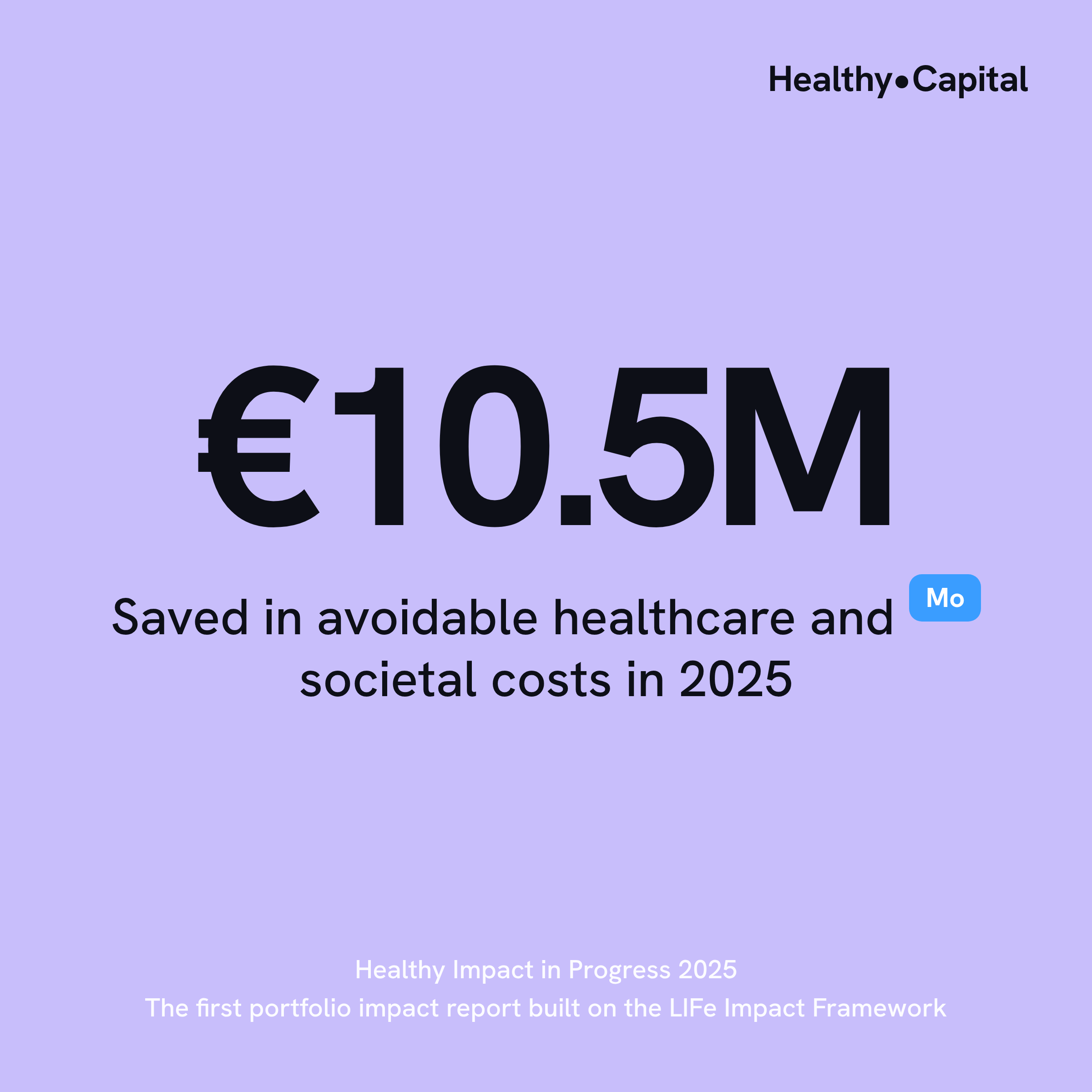
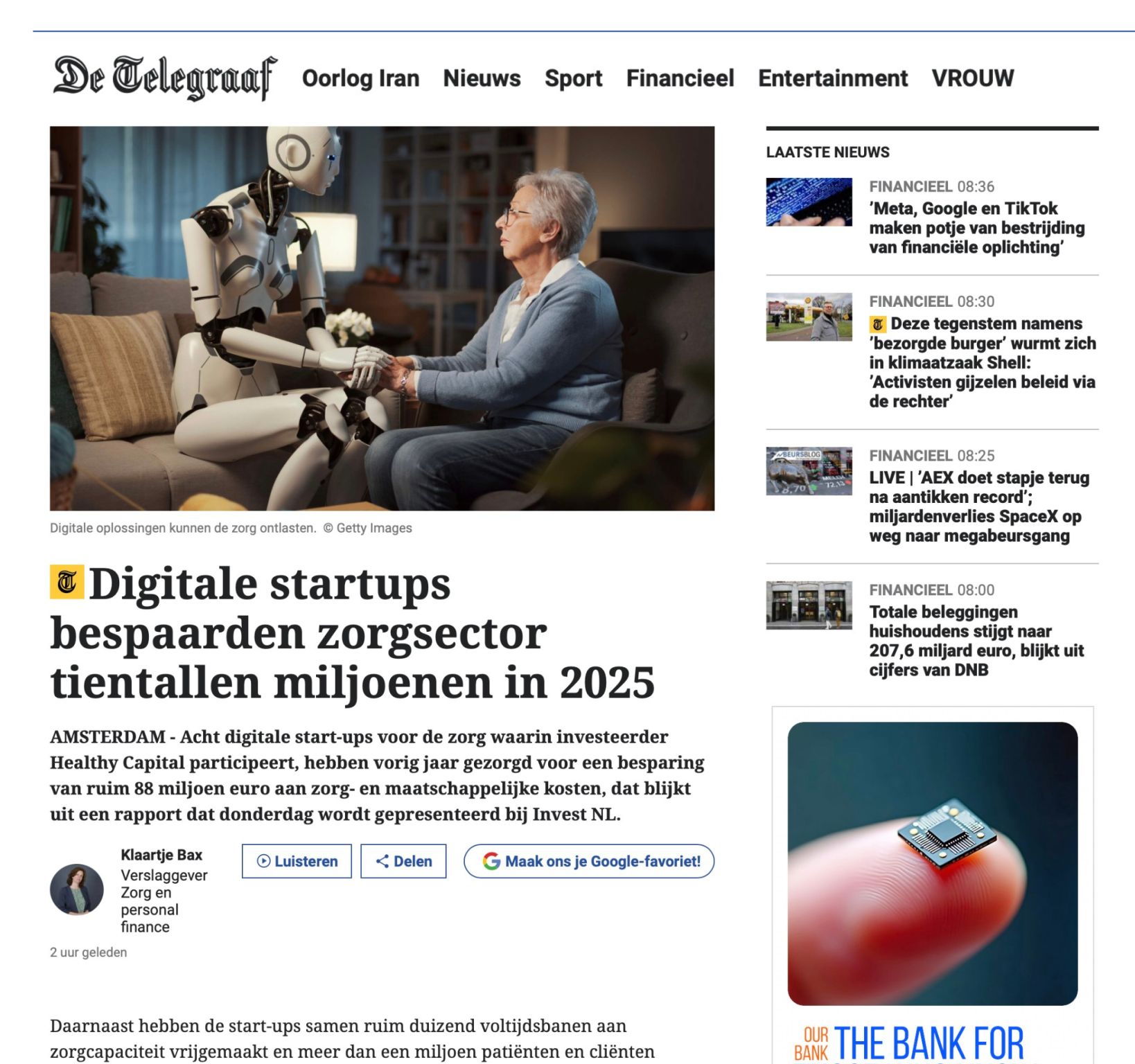
This is the point the sector most needs to hear right now. Primio and Saar aan Huis are not lucky exceptions. They are two of the ten companies we measure in full, company by company, and publish. Together those ten return the equivalent of 1,015 full-time care workers to the system in a single year, every number substantiated. That is capacity the sector cannot recruit, freed by companies that already exist.
The tools are ready. The sector should reach for them
BDO is right to tell boards to adopt labour-saving technology faster. I would go one step further. Bring the tools that already work inside now, as partners rather than pilots, instead of waiting for a perfect moment that never quite comes. The people who carry this system cannot wait, and they do not have to.
This gap will not close on its own, and it will not close through hiring. The benchmark and our portfolio point the same way. The pressure is real, and so is the relief, measured and running today. The sector does not need another promise. The proof is already on the floor and in the home. It only needs to be put to work.
Douwe Jippes is co-founder and managing partner of Healthy.Capital.
Read more

.png)


-3.png)
-2.png)

.jpg)


