
We do not need to invent the healthcare of the future. We just need to organise it.

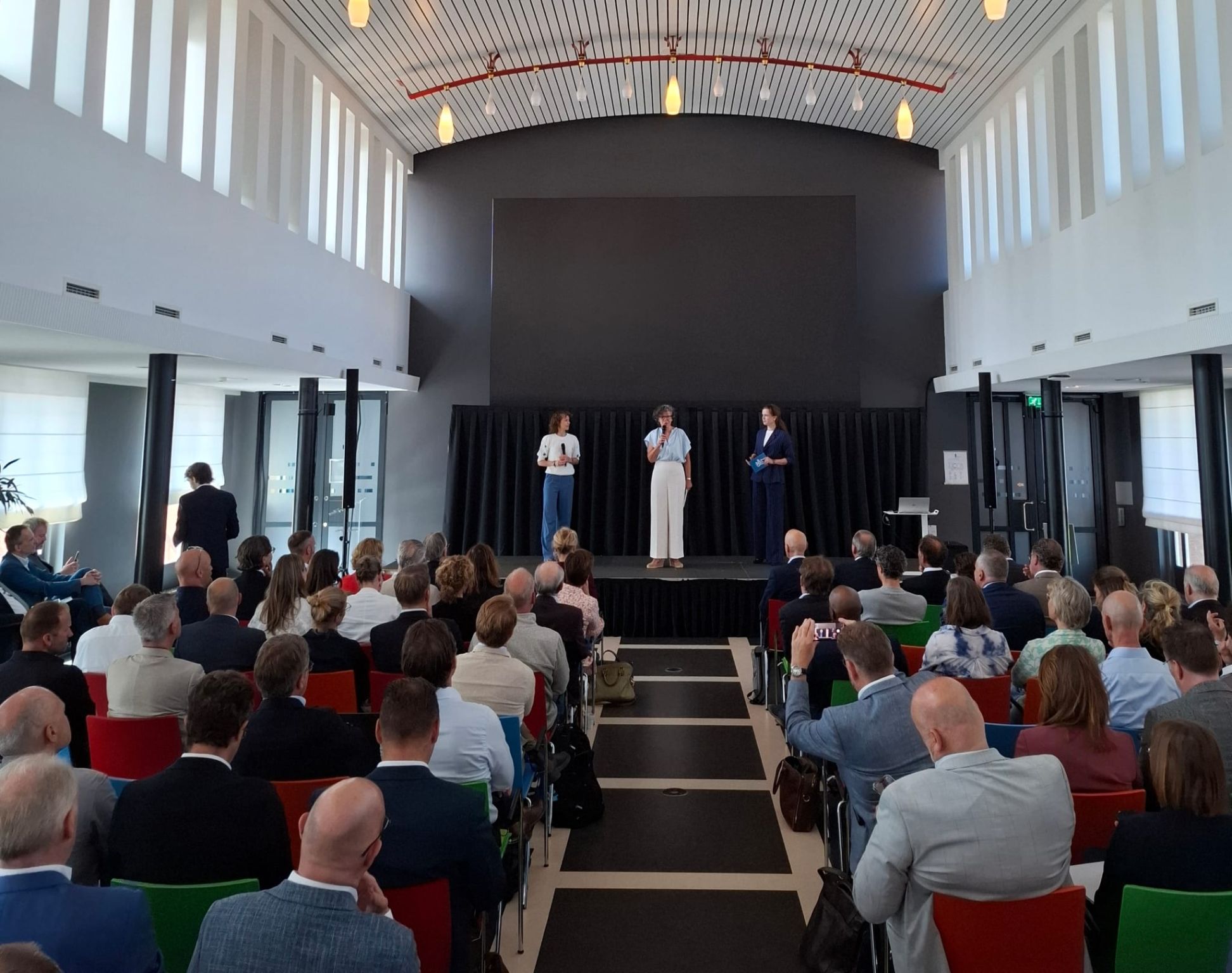
At the MedTech 2035 conference on 6 July, Dutch ministers Sophie Hermans and Heleen Herbert announced an additional €102.5 million in investment over the next ten years, backing the ambition to make the Netherlands a world leader in medical technology again.
The investment is a welcome signal. Yet development capital on its own does not change healthcare. Innovation only creates impact when a new solution genuinely replaces an old way of working.
Spread over ten years, €102.5 million comes to roughly €10 million a year. Set against the ambition to make the Netherlands the leading MedTech hub in Europe by 2035, that is not enough. It is a cautious first step. Positive, but not proportionate to the scale of the ambition or theurgency of the problem.
Much more is possible, and much more is needed. Not only more capital for development, but a system that buys, implements and scales proven innovations faster. Otherwise we keep funding technology that stalls in pilots, outdated reimbursement, poor data exchange andguidelines that fail to keep pace with developments abroad.
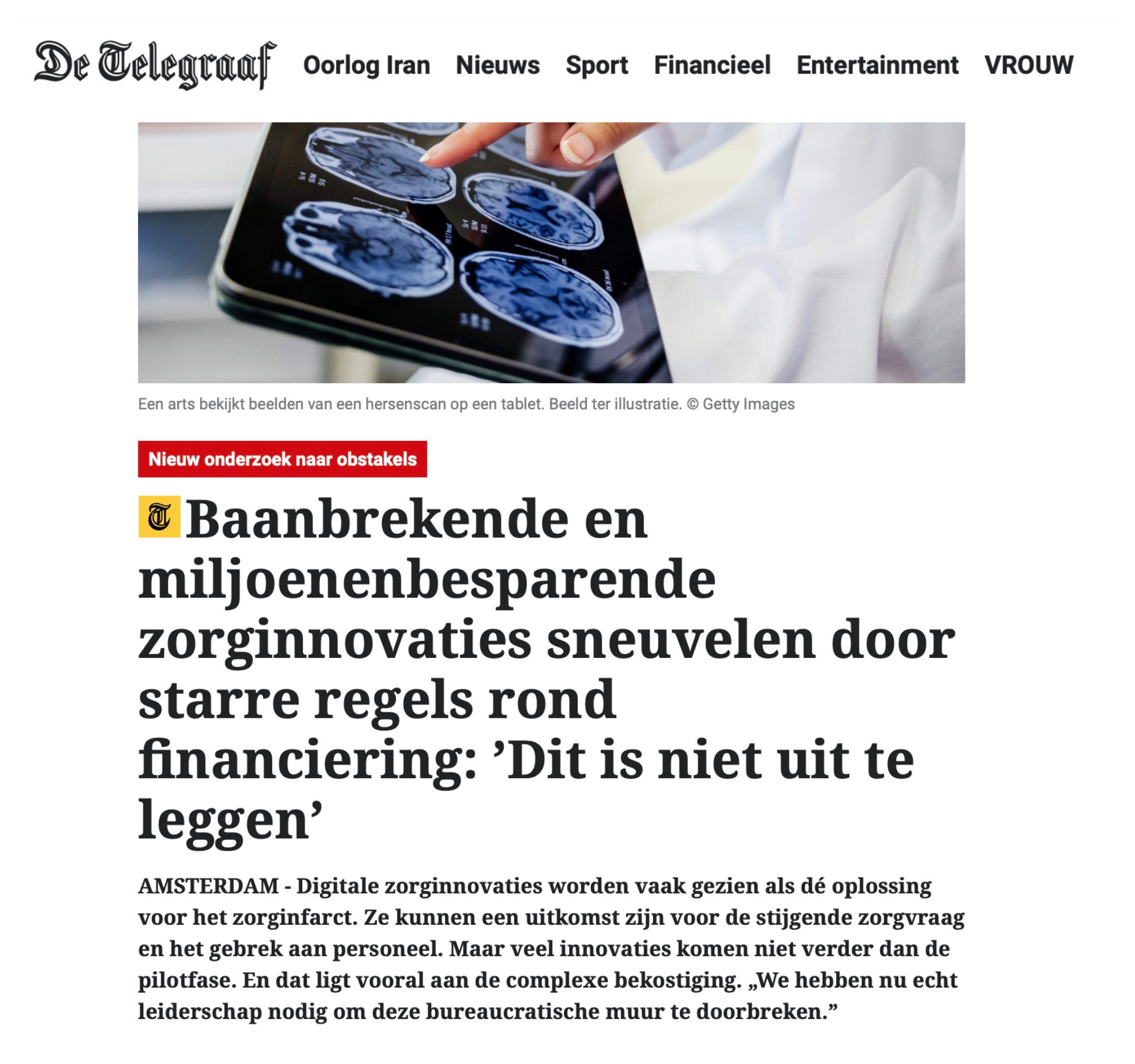
The Netherlands is good at research, pilots and innovation programmes. We are far less good at national implementation. The National Health Care Institute concludes this itself: agreements on collaboration and data exchange are introduced slowly, and scaling lags behind.
So the real question is not how much we invest. It is how we make sure these innovations actually change healthcare?
1. Buy outcomes, not production
Insurers and providers need to sign multi-year contracts built around health outcomes, access and freed-up capacity. Not payment for more consultations, tests and treatments, but for demonstrably better outcomes, less avoidable care, lower pressure on professionals, greater patientindependence and structurally lower costs across the whole chain.
An innovation that prevents hospital care should not be penalised financially because the benefit lands with another organisation or within another budget.
2. Make structural funding part of every innovation programme
A pilot without a predetermined route to reimbursement is usually a slow goodbye. Before it starts, four things should be clear: who buys the solution once results are proven, which existing budget pays for it, which old care is phased out, and within what timeframe scaling takes place.
Not a pilot to discover whether something is interesting, but implementation to establish how quickly it can be scaled responsibly.
3. Speed up safe data exchange
Good care does not stop at the front door of a hospital, GP practice, clinic or home care team. New legislation is gradually requiring electronic data exchange. That is necessary, but technology alone is not enough. The legal interpretation, standardisation, liability and patient access must also become simpler and more consistent.
Data should travel safely with the patient. It should not stay locked inside the system of the organisation that collected it.
4. Actively phase out avoidable care
Appropriate care, in the Institute's own words, is care that works, costs a reasonable amount, sits close to the patient and is not delivered unnecessarily. That requires a far more active de-implementation agenda. When a treatment, test or process demonstrably adds little value, stopping should become as normal as starting.
Every new intervention should therefore come with one question: which existing care does this replace? Without phasing out, innovation simply piles on top of the existing system. Costs rise, and workload rises with them.
5. Update medical guidelines faster
A guideline should not become an archive document. Guidelines that have not been substantively revised for years should be reviewed automatically against new international studies, real-world evidence and current standards of care.
Not every treatment needs to stay the same for ten years because the process to change a guideline is too slow. Scientific progress should reach daily practice faster, with medical quality and independent oversight maintained.
6. Organise care around expertise, not around buildings
Not every hospital or region needs to offer every treatment itself. Concentrate specialist expertise where it demonstrably produces better outcomes. Combine physical care with digital monitoring, home measurement and regional collaboration.
Patients should reach the best expertise regardless of which front door they enter. Collaboration then means more than referral. It means sharing responsibility for the entire care pathway.
7. Less management, more effective care
Professionals still spend too much time on registration, internal reporting, differing purchasing conditions and systems that do not talk to each other. Technology should not create more dashboards and layers of management. It should give time back to patients and professionals.
The central question for every organisational change should be one thing: does it demonstrably deliver more time and better care for the patient? If not, we should stop.
8. Make health more proactive and more personal
Care today usually begins when someone develops symptoms. That needs to shift towards earlier detection, prevention where possible, and helping people take an active role in their own health. Digital monitoring, personal health data, early diagnostics, lifestyle support and easy access give people more control. Not to turn everyone into a permanent patient, but to prevent illness and heavier care where possible.
This consumerisation of health is coming regardless. The choice is whether we organise it well, safely and accessibly, or leave it to commercial platforms outside our health system.
9. Lead from what is possible
The most important change may not be technological, legal or financial, but one of leadership. We need leaders who do not only defend what has worked for years, but who actively create room for what can demonstrably be done better.
The starting question should not be: why can this not work within our system? It should be: what do we need to change to make this responsibly possible?
The Netherlands has the knowledge, the entrepreneurs, the professionals and the technology to organise healthcare fundamentally better. Now we also have to be willing to let go of old contracts, systems, guidelines, interests and treatment methods.
Innovation only succeeds when the new is scaled up, and the old actually disappears.
Read more




.png)




-3.png)
-2.png)

.jpg)


