
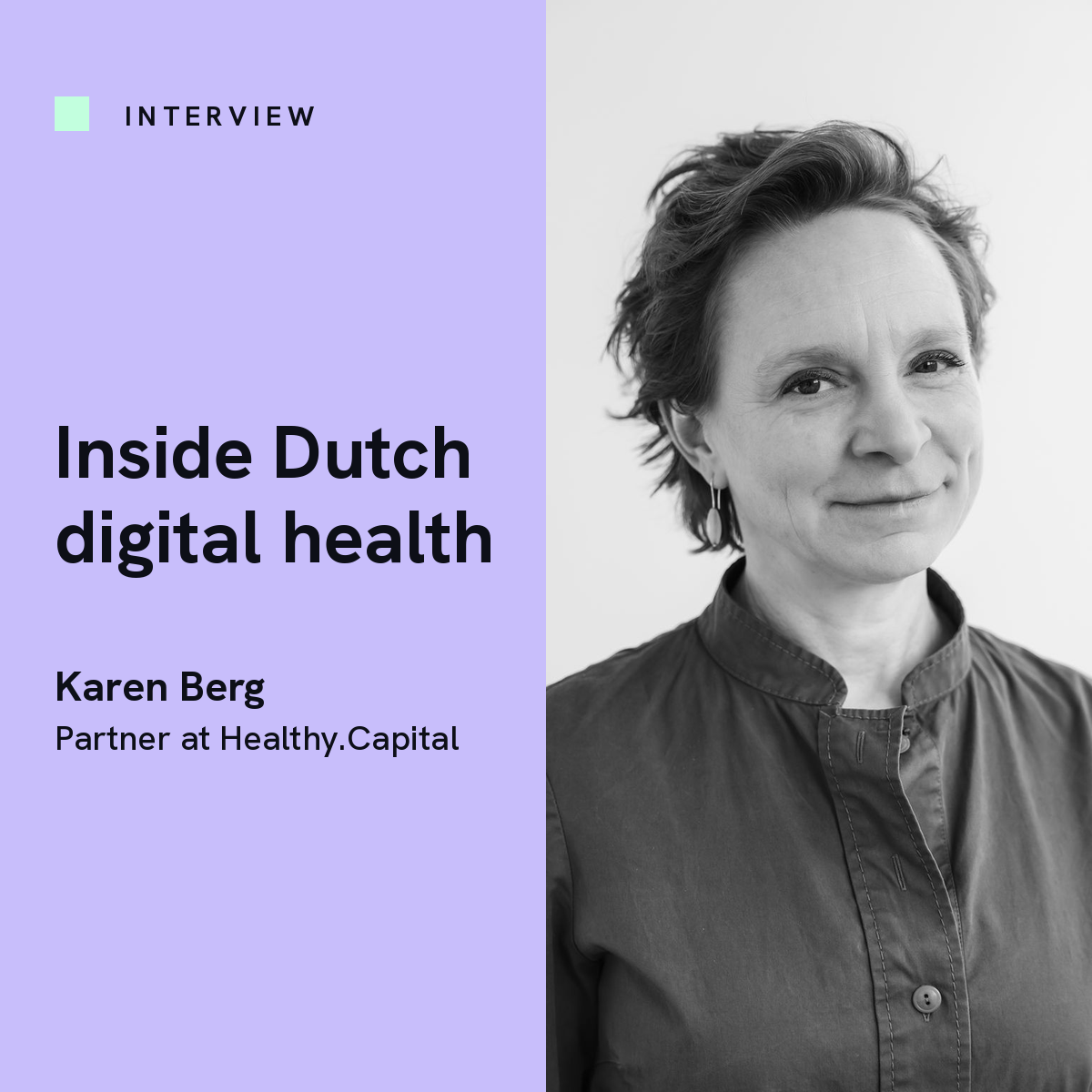
Inside Dutch digital health: Karen Berg on measuring what actually works

By 2030 the Netherlands is expected to be short of 150,000 healthcare workers. Technology driven health innovation is part of the answer. The harder question is which innovations actually deliver, and how you prove it. In this interview series we speak to the people who work on that question every day. Founders building the companies, investors backing them, and the clinicians and patients who feel the difference first. Every one of them knows what it takes to get something to work in practice.
We kick off with Karen Berg, partner at Healthy.Capital. A career in legal, corporate and investor relations roles brought her to the team in early 2025, and a year and a half on, her fingerprints are all over the facts and figures. She was the driving force behind the impact report, the first of its kind in the sector. A conversation about why proof matters more than promise in this field, what makes a company worth an hour of her time, the gap in women's health, and the fund that comes next.
Karen, how do you describe Healthy.Capital to someone who has never heard of it?
"We are an early-stage investor in Dutch digital health. We back startups that keep our healthcare affordable and accessible."
You joined in early 2025. What brought you to the team?
"I was having a sabbatical following the loss of my brother to cancer, and I started feeling like working again. After several corporate roles, I was looking for a new challenge. Somewhere I could learn, put my experience to use, and work close to companies that are actually buildingsomething.
I started my search by posting on LinkedIn, to see where that would get me. That resulted in a number of interesting propositions, one of which was a DM from Douwe. Healthy.Capital matched my wish list perfectly, and there was a good personal click as well. I looked seriously at the other offers, but this one felt best. It is a diverse and inspiring group of people, and I consider myself lucky to be part of it."
In a partnership of four, which decisions tend to come your way?
"We always take decisions together, as a team. Having said that, given my legal background and my corporate and investor relations experience, the team tends to look in my direction when those subjects come up. In practice that means governance, institutional investors, legal, compliance."
When a company comes across your desk, what tells you it is worth your time?
"Whether it solves an actual problem. Whether it creates value by addressing rising healthcare costs, the capacity shortage, or growing demand for care."
And what ends the conversation?
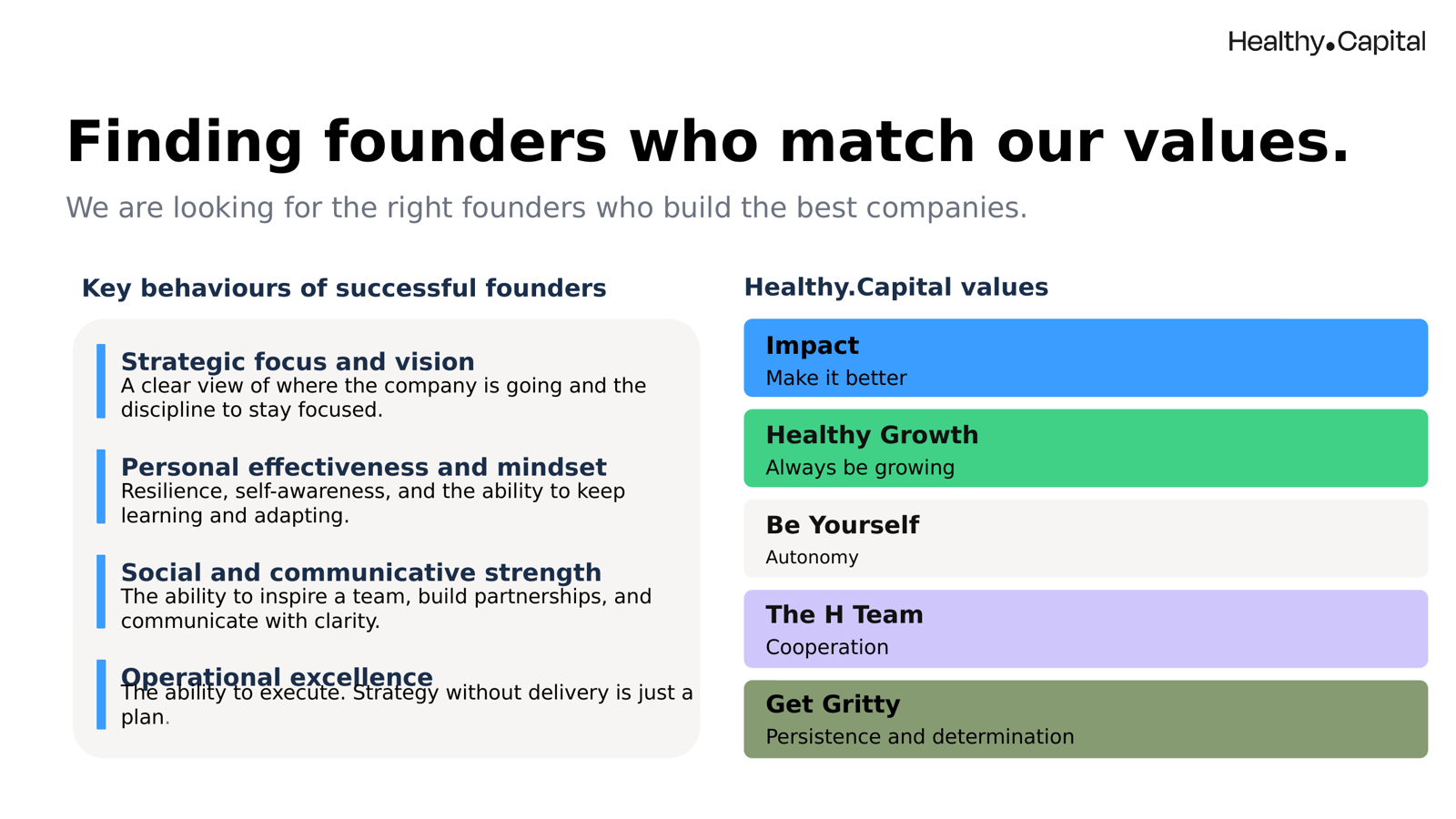
"That one is simple: no match with our values. We are early-stage investors, so we are in it for years. That only works if you want the same things, and you usually pick up on that quite early in a conversation."
Healthcare has been under pressure for years. Why is this the moment for capital to move into digital health?
"Because the pressure and the readiness now meet each other. Demand keeps growing, costs keep rising and the workforce shortage means we cannot keep delivering care the way we do today. That much has been true for a while. What has changed is the other side. The willingness of healthcare organisations to work with digital health solutions is increasing and accelerating. The solutions are becoming more capable, easier to use and cheaper. And healthcare is one of the largest parts of our economy, it touches everybody, and it does not slow down when the economy does.
Healthcare is not one category. There are very different worlds inside it, and we focus on one of them: the digital transformation of care. Technology businesses rather than capital-intensive life sciences. That is a much broader opportunity than most people assume when they hear the word healthcare."
Healthy.Capital put its portfolio through the LIFe Impact Framework and published the results in full. What made that the right moment?
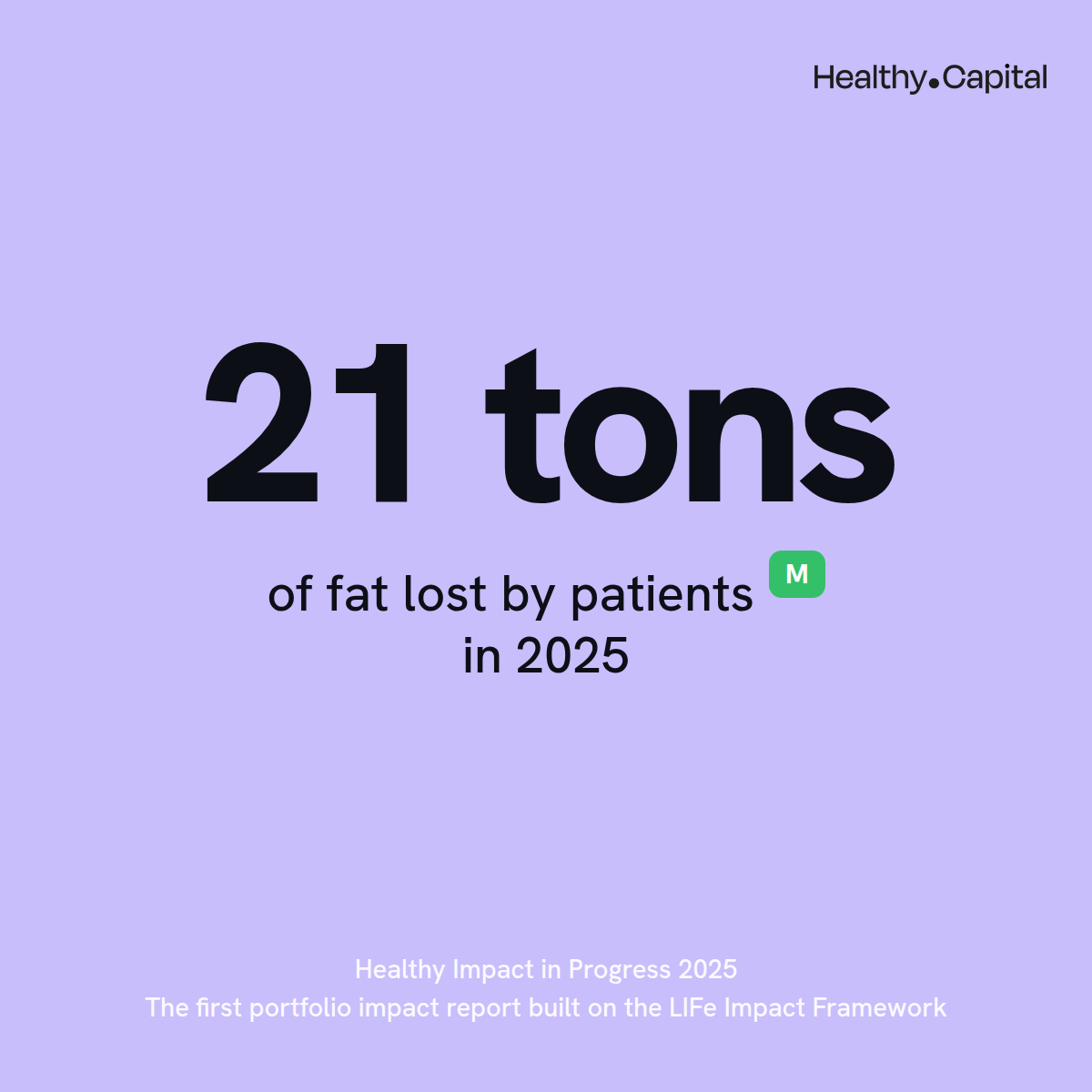
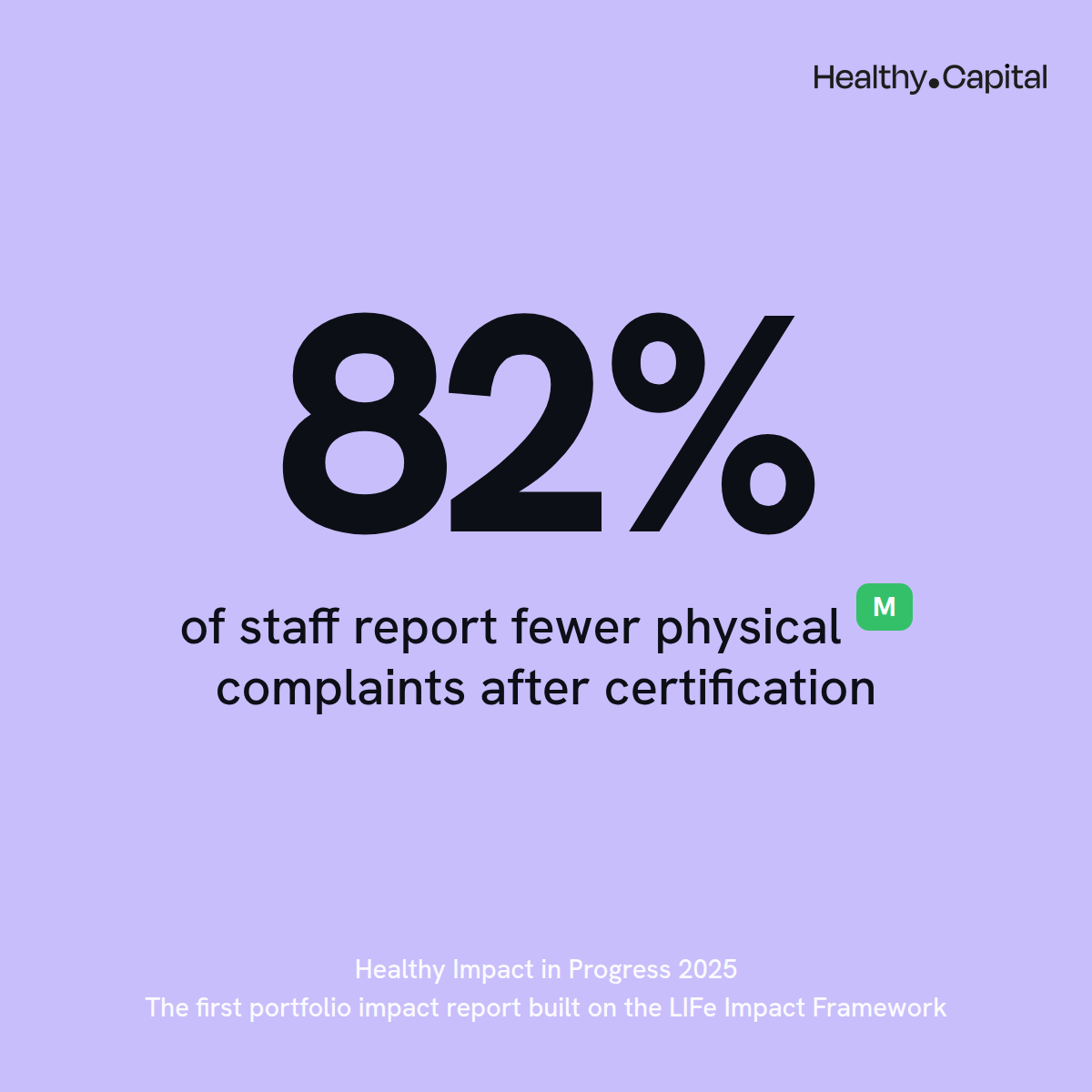
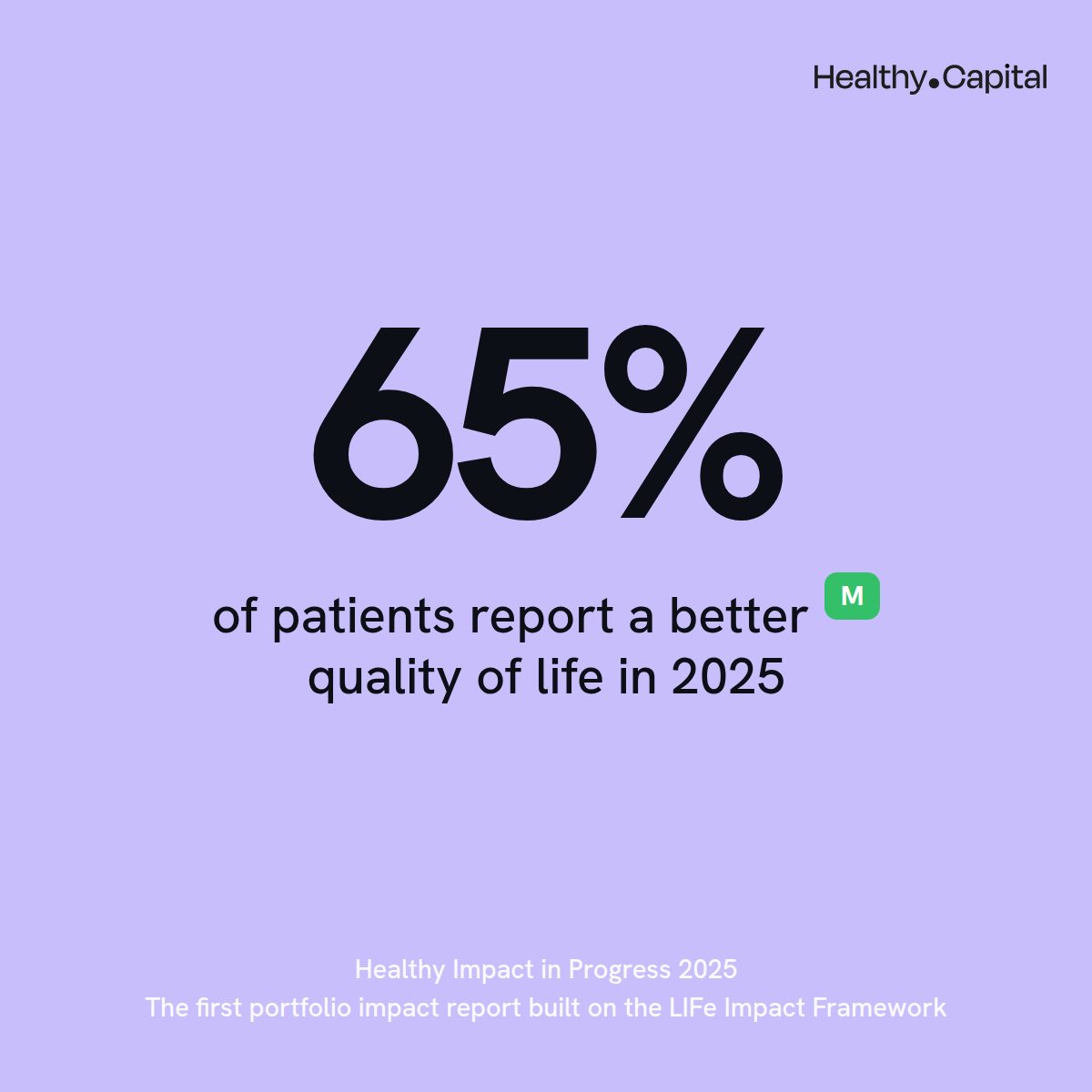
"We were excited to finally be able to show, using an external framework, what we have always claimed our portfolio delivers every day."
For every euro invested, the companies you measured prevented more than five in healthcare costs. Did the scale of that surprise you?
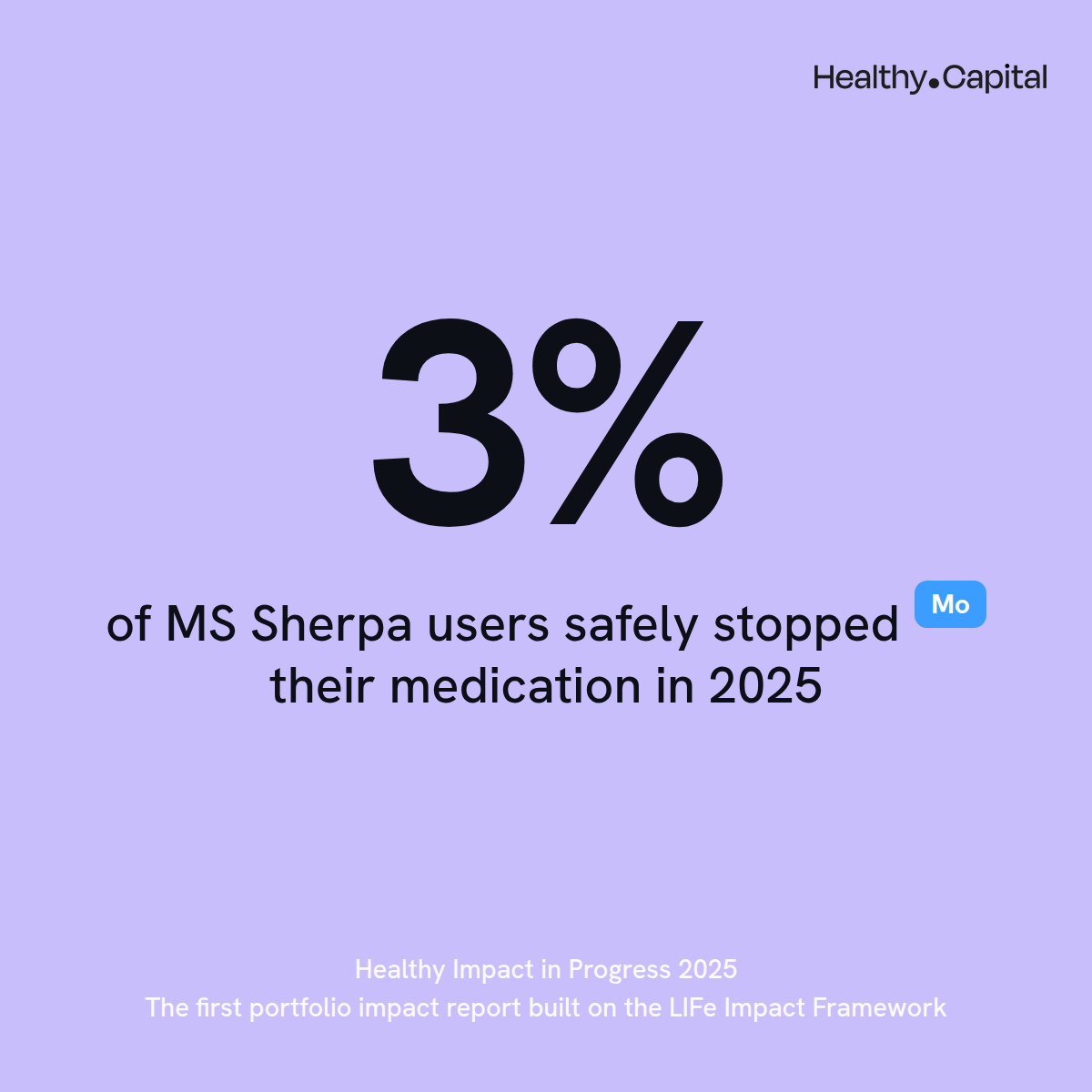
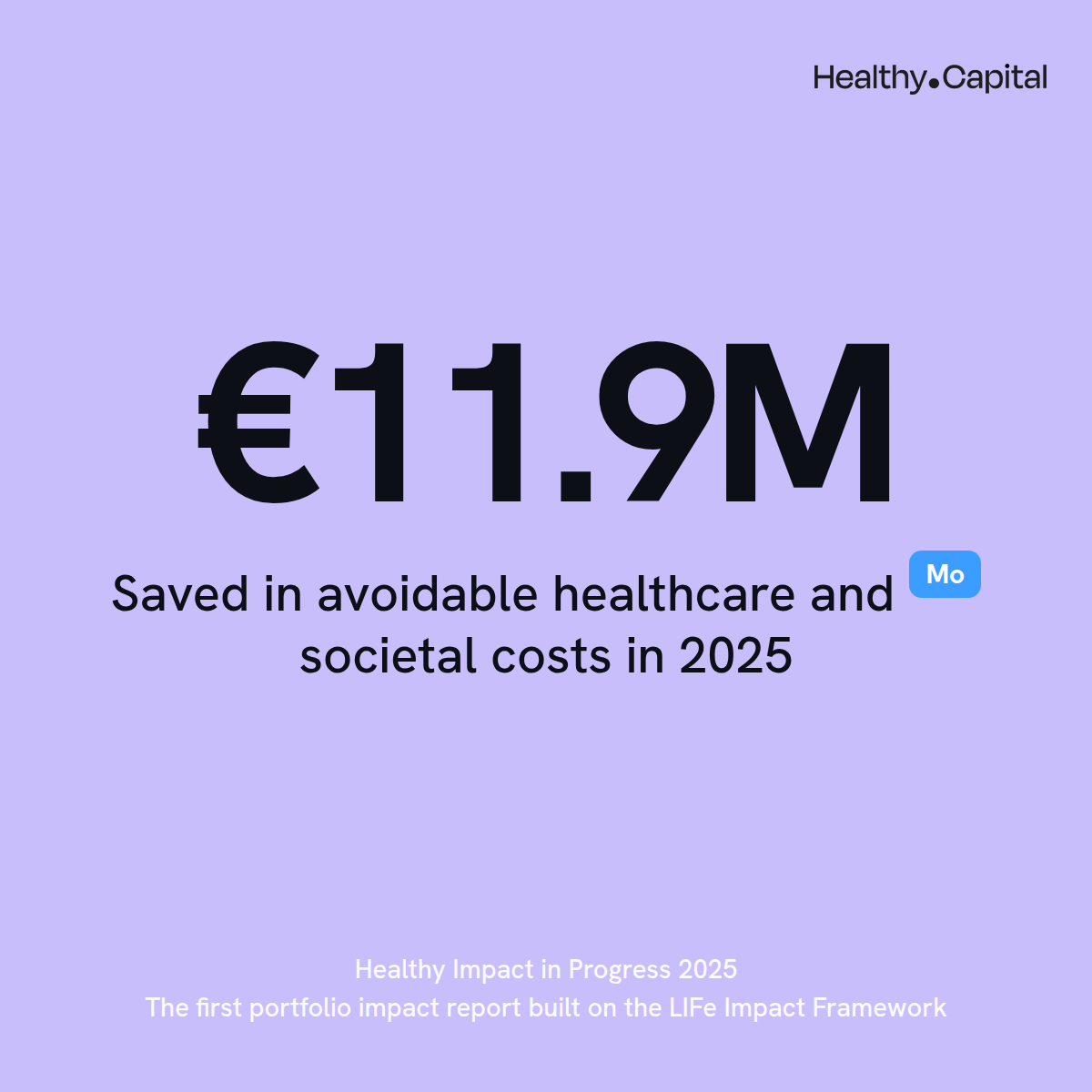
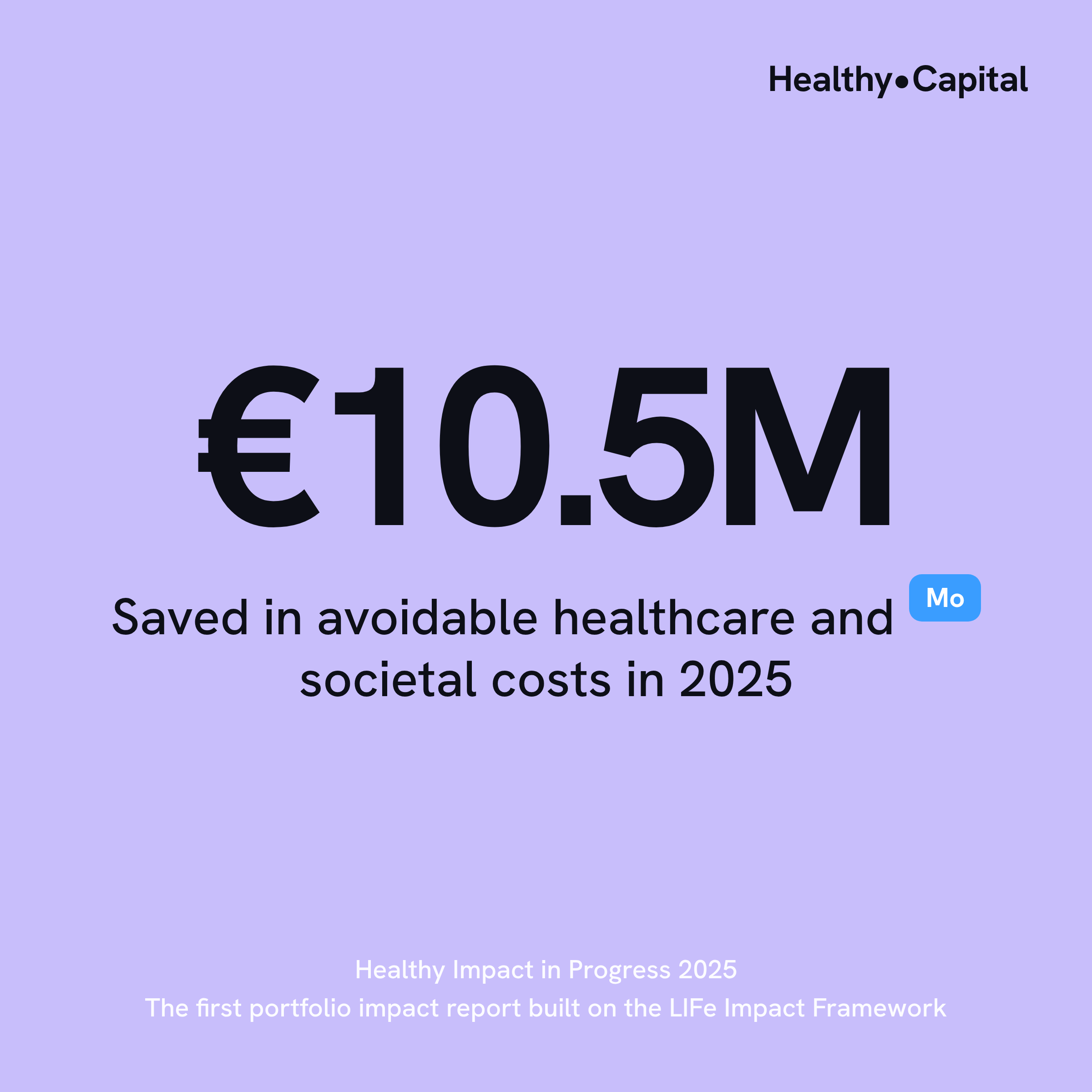
"We knew we were making impact. Seeing it reflected in an actual euro amount and an impact money multiple was pretty amazing. We have checked the calculations quite a few times. That number only covers the companies where the underlying data was solid enough to stand behind, so it is still an early view. As those companies mature and more of the portfolio becomes measurable, the figure has room to grow."
What do you understand about Dutch digital health that other investors still underestimate?
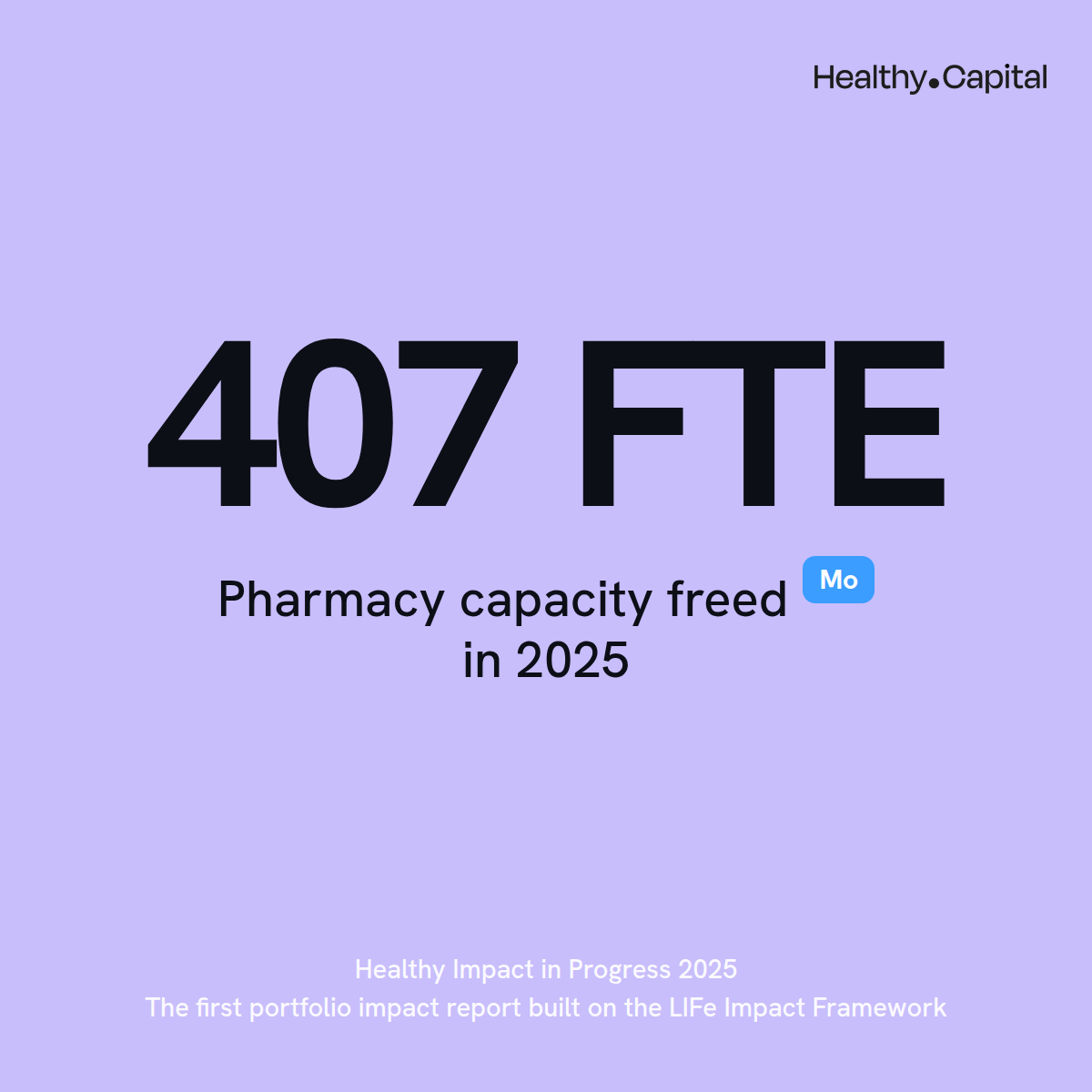
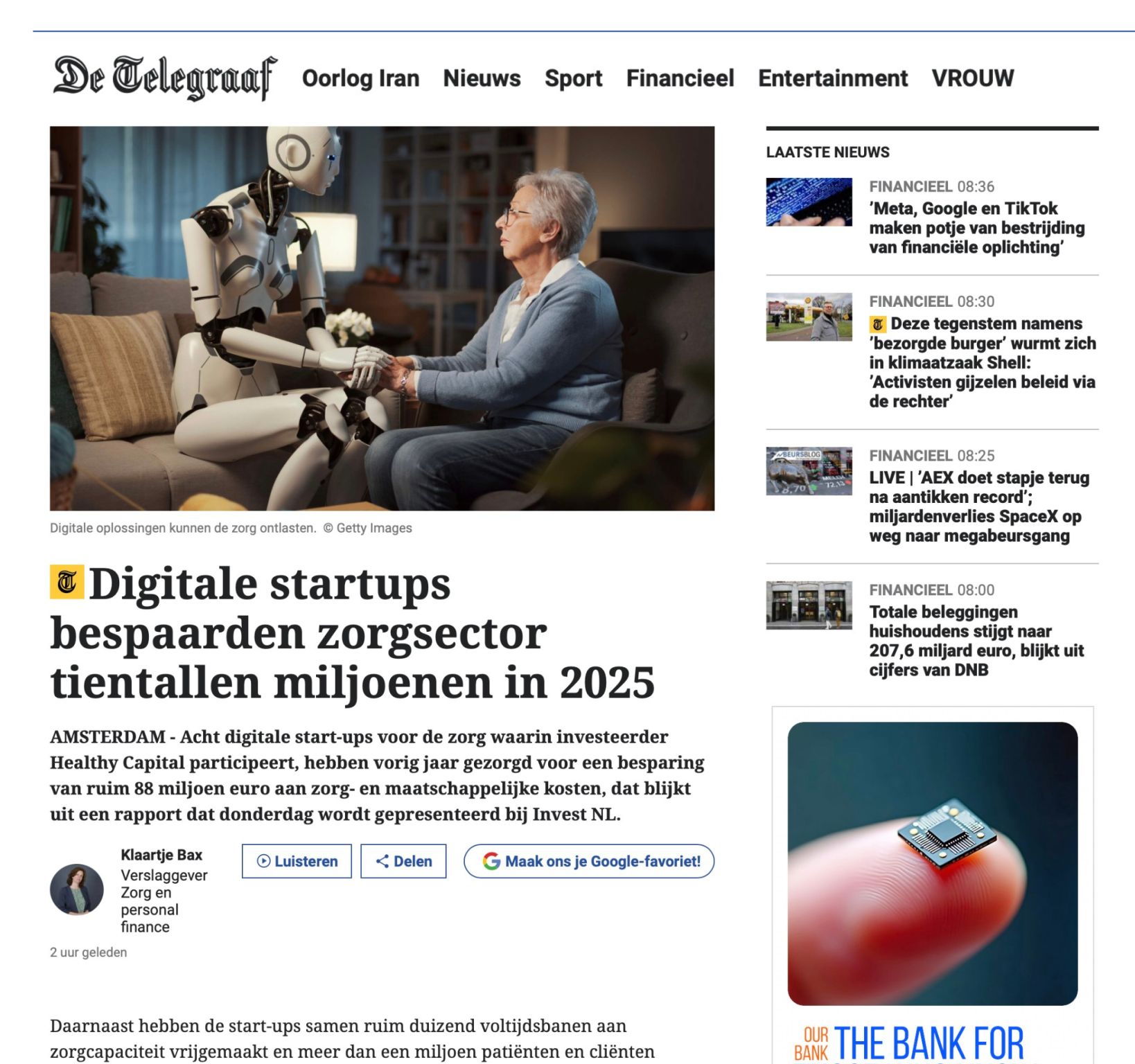
"How much it actually delivers. With the companies we measured we prevented €88 million in healthcare costs and freed 1,015 FTE in capacity, in 2025 alone."
One area you have spoken about publicly is women's health. What draws you to it?
"Most female health problems were never properly studied. For decades medical research ran on male bodies, and women are still misdiagnosed, dismissed or diagnosed too late. That applies to conditions we treat as gender-neutral, such as heart disease, and to female specific conditions such as endometriosis.
FemTech gets reduced to wellness, but a sleep app or a mood tracker does not close that gap. The real work sits in data, diagnosis and treatment. Those are the hard problems, and AI keeps running into the same wall there: very little historical medical data on the female body. It is a good example of what we look for more broadly. Not the products that are easy to build and easy to copy, but companies solving an actual health problem, with impact you can prove in numbers."
What do founders get from Healthy.Capital that a larger, generalist fund cannot offer?
"Sector knowledge and expertise, and a network. When we run into something outside our own experience, there is always somebody we can call. Our founders get the same access."
A third fund is on the way. What are you setting out to do with it?
"We are continuing our investment focus, so we are not trying to prove anything new. Our current portfolio has prevented €312 million in healthcare costs since we started in 2018. With our third fund we target another €500 million."
What should an investor understand about how you work before committing capital?
"Investing in Healthy.Capital means impact and financial return. Invest €50 million, return €100 million, prevent €500 million."
Read more


.png)


-3.png)
-2.png)

.jpg)


