
Digital Health, MedTech, HealthTech: why the labels are blocking the capital healthcare innovation needs

European healthcare innovation does not have a hardware problem. It has a categorisation problem, and that categorisation is quietly starving a whole segment of investable companies of capital.
Talk to investors, policymakers or founders about healthcare innovation and the conversation splits into three buckets almost automatically. MedTech covers digital diagnostics, devices, hardware and class IIb certification. Digital Health covers services, AI-native software, digital therapeutics and apps. HealthTech is the catch-all for everything in between. Funds get structured around these labels. Policy agendas get written around them. The companies themselves do not sort neatly into any single box, and that mismatch is now the bottleneck.
The three-way split does not hold up
Under the EU Medical Device Regulation, software itself can be a medical device. Rule 11 states that software providing information used for diagnostic or therapeutic decisions is classified as class IIa at minimum, rising to class IIb or class III as theconsequences of that decision become more serious. In practice, that software carries the same certification burden as a physical device. Monitoring software frequently falls into the same category.
The result is that one company can be a software business, a digital health business and, by regulatory definition, a MedTech company at the same time. Regulation follows the medical function and the risk of the application. It does not follow whether a company mainly sells hardware or software.
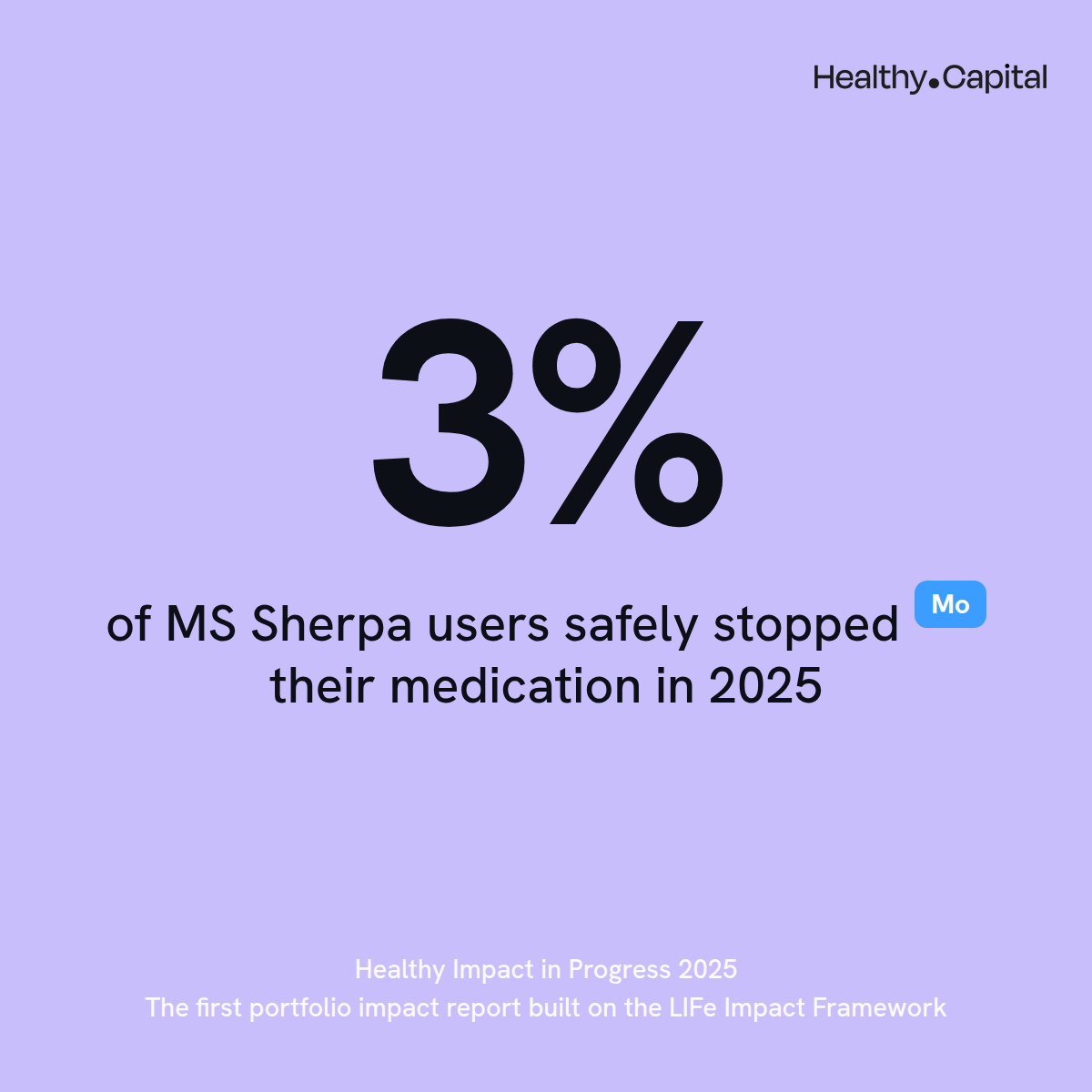
Dutch examples make this concrete. VRelax combines a software-driven VR intervention with hardware and MDR certification. MS Sherpa is a digital monitoring solution deployed as a medical device. Homed-IQ pairs a digital platform with home sampling and laboratory diagnostics. Reducept combines software, VR hardware and a clinically validated treatment method. Ask Aletta shows the reverse case: medical AI that stays outside medical device regulation because its intended use remains informational rather than diagnostic.
These are not edge cases. This is where most healthcare innovation now lives, across Digital Health, MedTech and HealthTech at once rather than in one of them.
A large market with thin specialist capital
Karista counted more than 3,800 European digital health companies in 2025, and 254 funds demonstrably investing in the sector, up from 84 funds in 2021. On the surface that looks like a healthy ecosystem.
Those 254 is a low bar. Three European digital health investments are enough to qualify. The number reflects investment interest, not the availability of specialist lead investors at pre-seed and seed who can carry regulatory, clinical, reimbursement and market access risk over multiple years. We have invested in 23 healthcare companies ourselves, and funds such as Nina Capital, CalmStorm, Heal Capital, Heran Partners, Capricorn Partners and NextGen Ventures invest with the same focus.
The Joint Research Centre of the European Commission confirms the underlying constraint. Financing restrictions remain relevant for innovative health startups and scale-ups at both early and later stages, and the European health venture capital market remains structurally weaker than the American one.
The Netherlands shows the same pattern sharply. State of Dutch Tech 2025, published by Techleap, reports that health companies represent roughly 20 percent of the Dutch tech ecosystem and that only about half of them have ever raised venture capital. The largest concentration sits at the bottom of the funding ladder: 200 companies have raised below €1 million and 85 companies between €1 million and €4 million, against only 62 companies in the €4 million to €15 million bracket.
The global trend cuts the wrong way for early-stage companies. CB Insights reports that the share of early-stage deals worldwide fell to 59 percent, the lowest level in its dataset, while mega-rounds absorbed 44 percent of all capital deployed. More total capitalin the system does not automatically mean the early-stage problem is solved. Often it means the opposite.
Generalist AI capital will not close this gap
The generative AI wave is pulling more generalist investors into healthcare. That is good news for the follow-on pool. AI does not lower sector-specific risk.
A generalist AI company proves product-market fit through user growth and revenue. An AI company that influences diagnosis or treatment carries all of that, plus device classification under the Medical Device Regulation or the In Vitro Diagnostic Regulation,clinical evidence requirements, data governance, healthcare procurement and reimbursement pathways.
The deeper AI moves into diagnostics and treatment, the greater the need for specialist medical, regulatory and commercial due diligence. Generalist AI funds expand the market. They do not remove the need for specialist health investors across Digital Health, MedTech and HealthTech alike.
What early specialisation buys you
Digital Health, MedTech and HealthTech companies differ fundamentally from generic software companies. Value creation runs through a longer chain: product, clinical validation, regulatory approval, implementation in the care pathway, reimbursement, commercial scale and international expansion.
In the earliest stages, classic venture metrics are not developed enough to underwrite a decision. The investor has to assess more than technology and market: which clinical evidence is required, when software falls under medical device regulation, how care pathways and procurement actually work, how reimbursement gets secured, and which milestones make a company investable for the next round.
Generalist capital can finance a large share of follow-on rounds. Specialist capital gets companies to the point where that follow-on capital is willing to look.
Where we sit in that chain
Since 2018 we have built a specialist position in early-stage digital health, spanning software-first innovation across the Digital Health, MedTech and HealthTech spectrum. Across our funds we have backed 23 companies, which together have raised roughly €80 million in follow-on financing.
We do more than deploy capital. Our core activities map onto the specific bottlenecks of healthcare innovation: reimbursement and market access, clinical validation, and access to insurers and hospitals. Across the portfolio, 85 clinical studies have been run or completed, and five companies have secured reimbursement from Dutch health insurers.
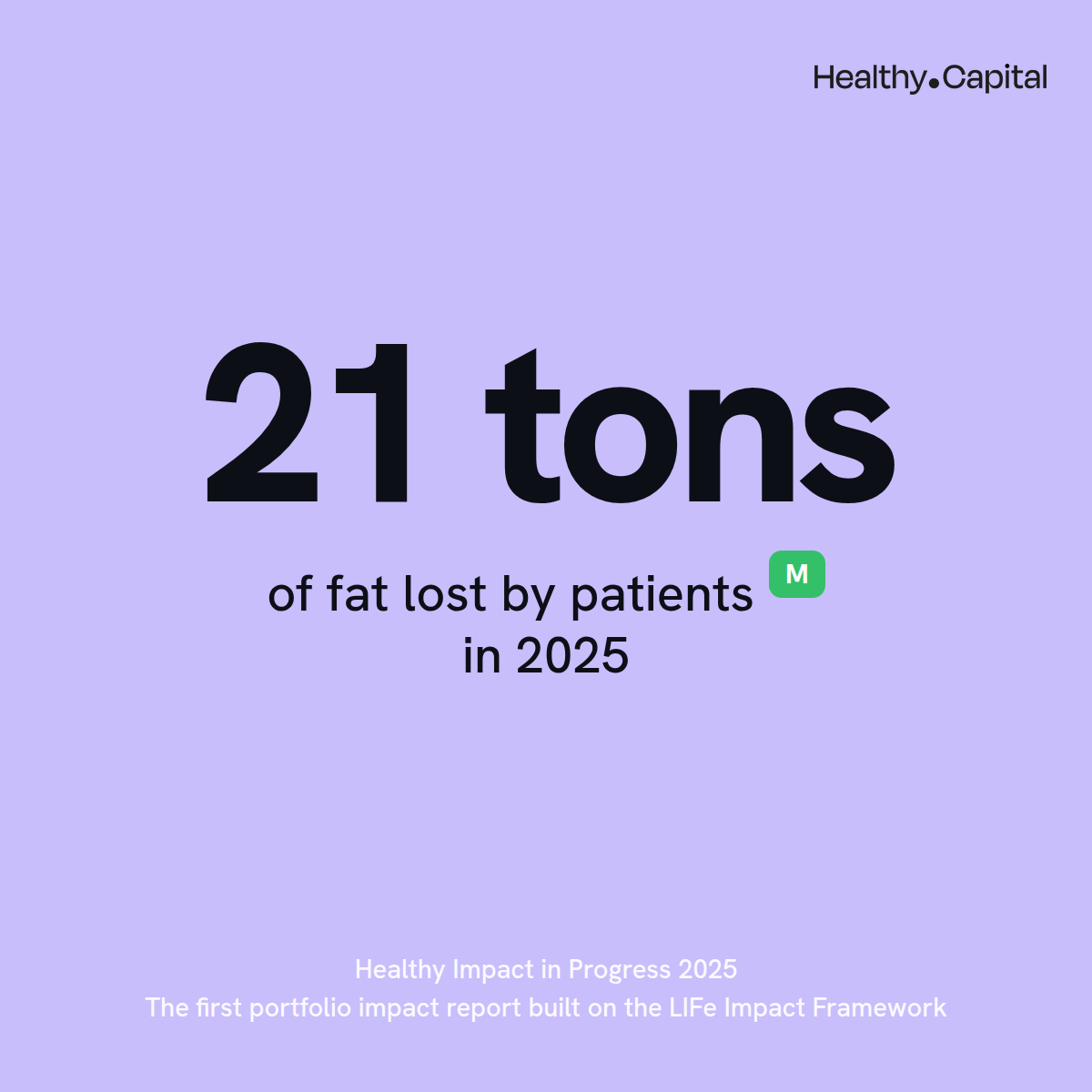
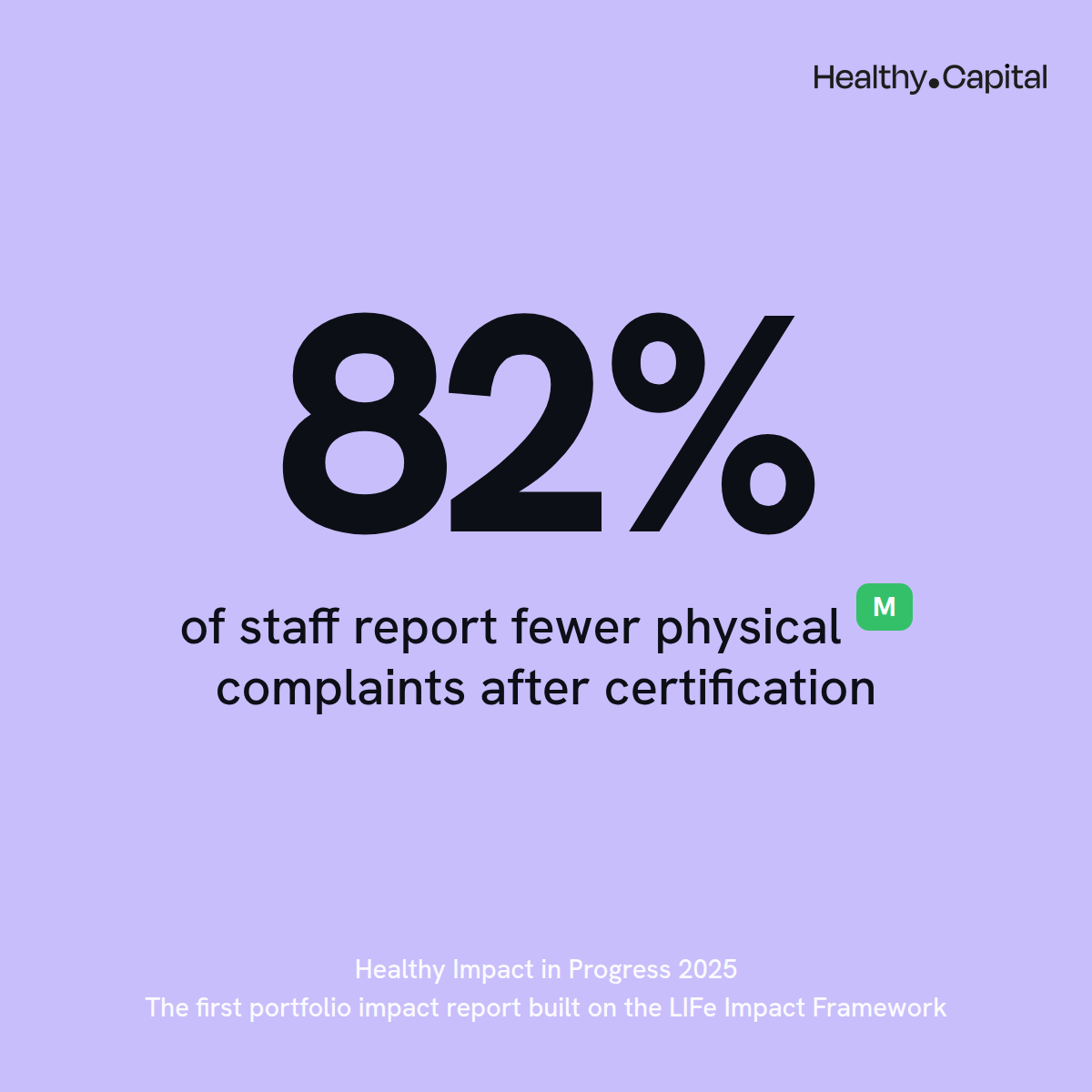
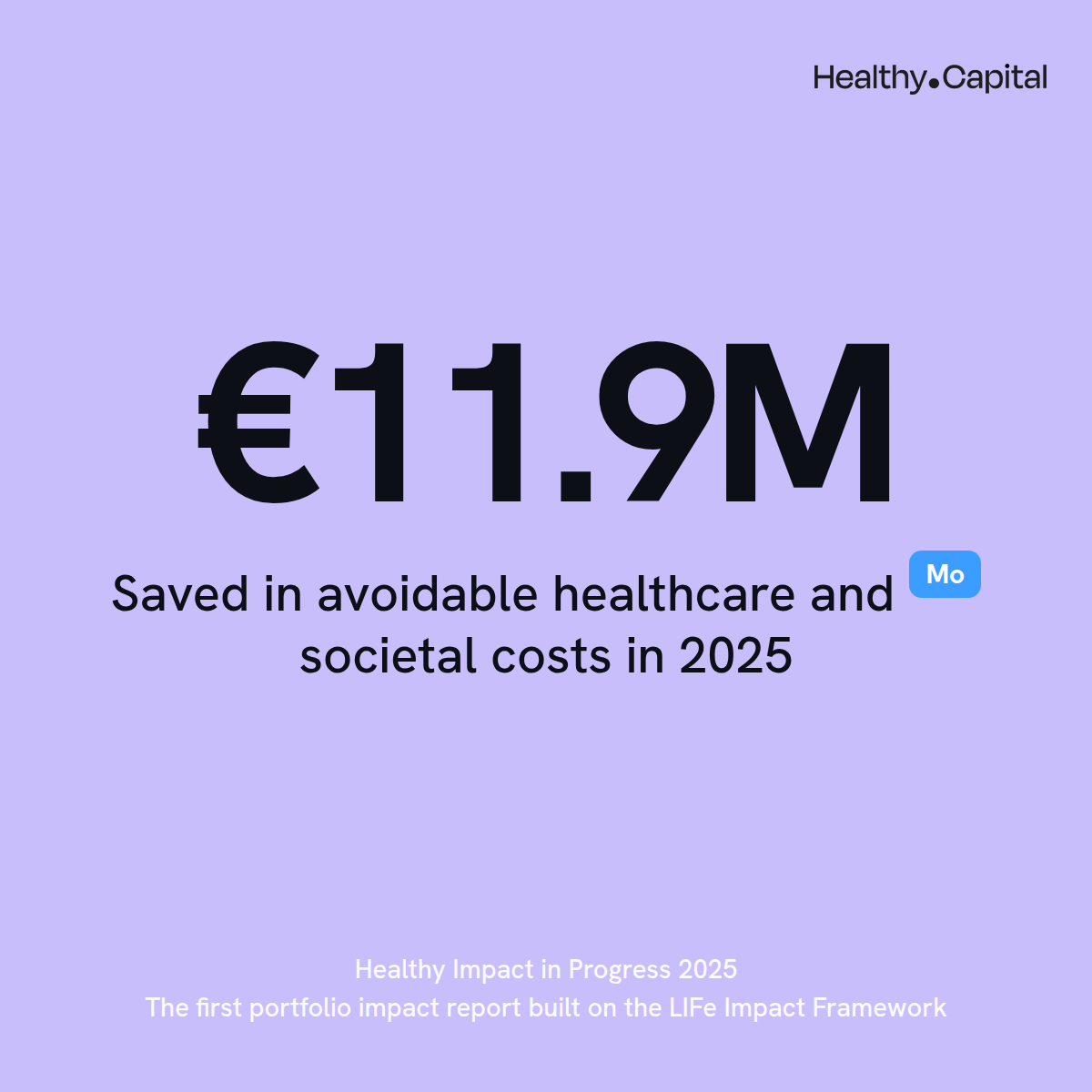
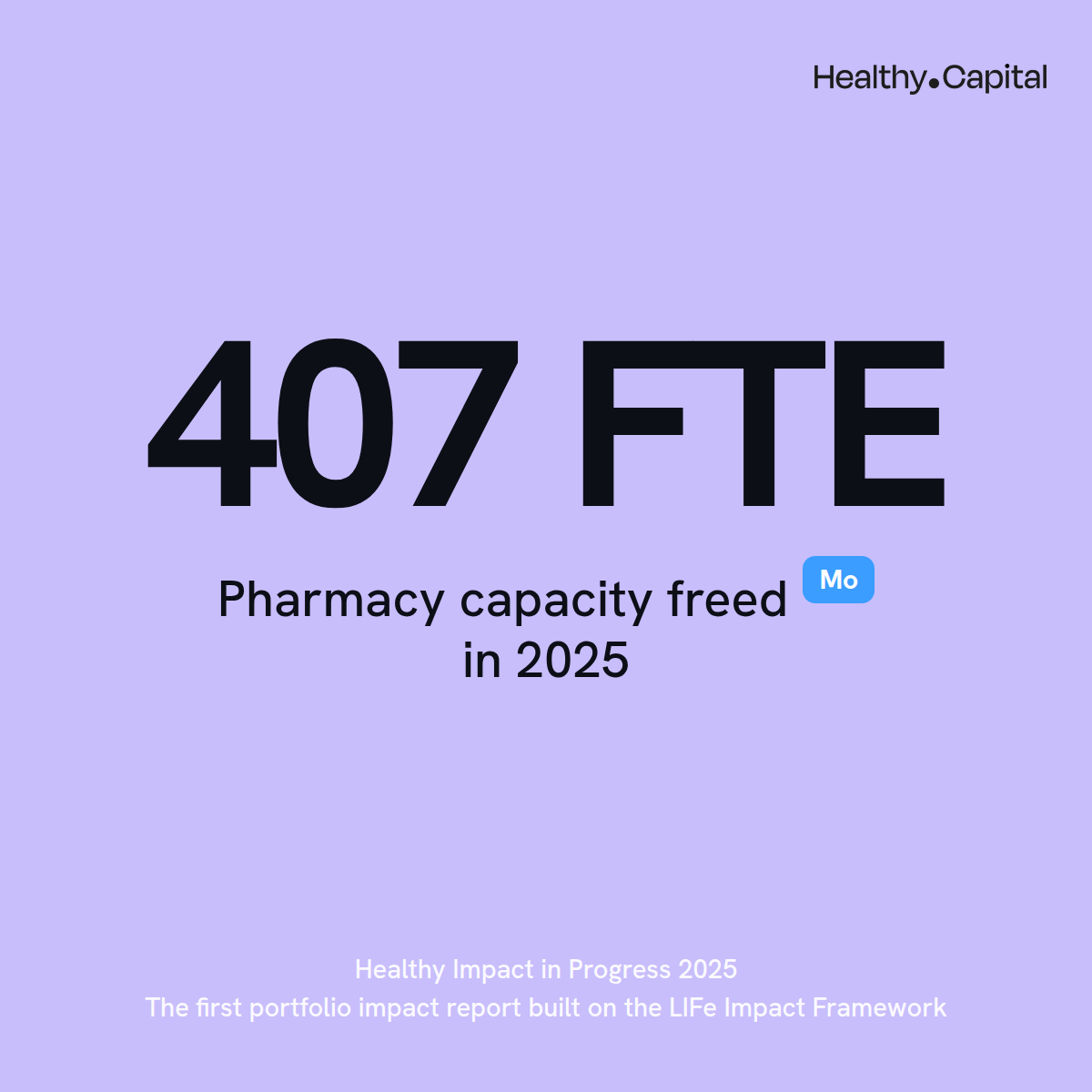
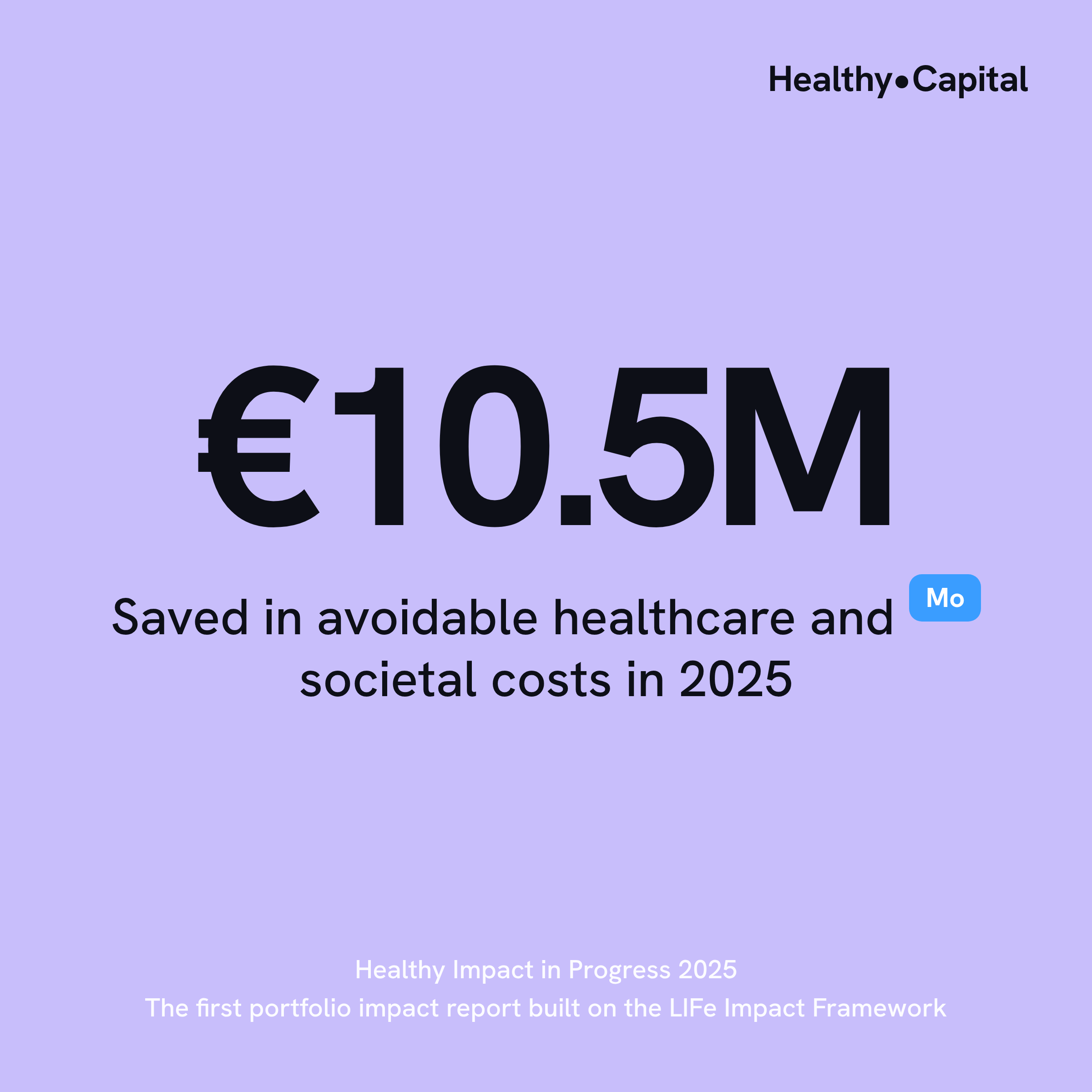
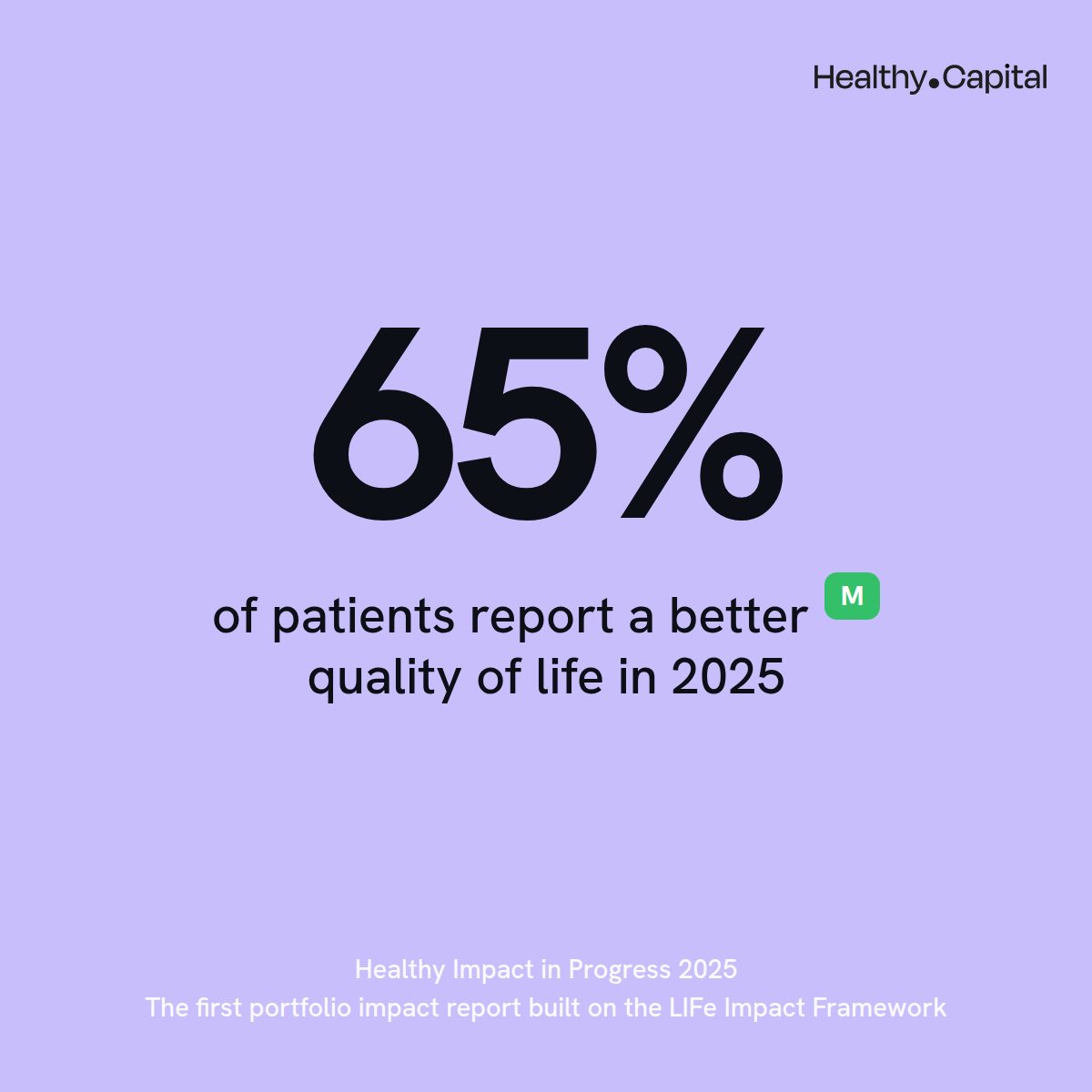
The 2025 impact figures are concrete. €88.3 million in avoided healthcare and societal costs across eight ventures. 1,015 FTE of freed-up care capacity across six ventures. More than one million patients and clients reached since 2018. The measured Impact Money Multiple is 5.19, being €20.8 million invested against €107.9 million in pro-rata avoided costs. That multiple is a floor rather than a ceiling, because only part of the portfolio is measured.
Working on a new fund, same scope
Our next fund continues this focus. We invest in early-stage companies across Digital Health, MedTech and HealthTech, primarily in the Netherlands and selectively across Europe, targeting software, AI-native products and platforms, tech-enabled services andclinically validated applications.
One point deserves sharpening. Fund materials in this market, including our own, tend to list MedTech as out of scope alongside hardware, life sciences and biotech. That is too absolute, and it risks excluding exactly the hybrid companies the thesis is built around.
A more precise framing is this. Out of scope: hardware-first MedTech, therapeutics and biotech, and capital-intensive life science development. In scope: software-first and data-driven healthcare across Digital Health, MedTech and HealthTech, including regulated medical software, digital diagnostics, clinically validated digital interventions, and solutions where hardware supports a scalable software or data core.
That framing matches how the market operates rather than how it has traditionally been labelled.
This is a collaboration problem as much as a capital problem
No single fund closes this gap alone, and no single label captures the full scope of what needs backing. The companies building the next generation of healthcare infrastructure in the Netherlands and Europe sit across all three categories at once. The capital ecosystem needs to organise around that reality rather than around historical definitions.
That means specialist early-stage funds, generalist growth investors, corporates, insurers and policymakers working from a shared understanding of where the real bottleneck sits, and building the connective tissue between pre-seed specialism and later-stage scale capital rather than each operating in a separate lane.
A strong Dutch and European health innovation ecosystem will not be built by one fund, one label or one institution. It will be built by closer collaboration across the full chain, from the earliest specialist cheque to the growth round that takes a company international.
That is the conversation worth having next.
Read more


.png)




-3.png)
-2.png)

.jpg)


